Clinic Descriptions and Clinician Bios:
Below are the clinic descriptions and clinician bios as they are currently provided by the clinician. They are subject to change at any time and may be updated by the clinician prior to the convention without notice.
To jump to a clinician, click on the first letter of their last name from the list below to jump to that section:
A | B | C | D | E | F | G | H | I | J | K | L | M | N | O | P | Q | R | S | T | U | V | W | X | Y | Z
A
David Ackmann
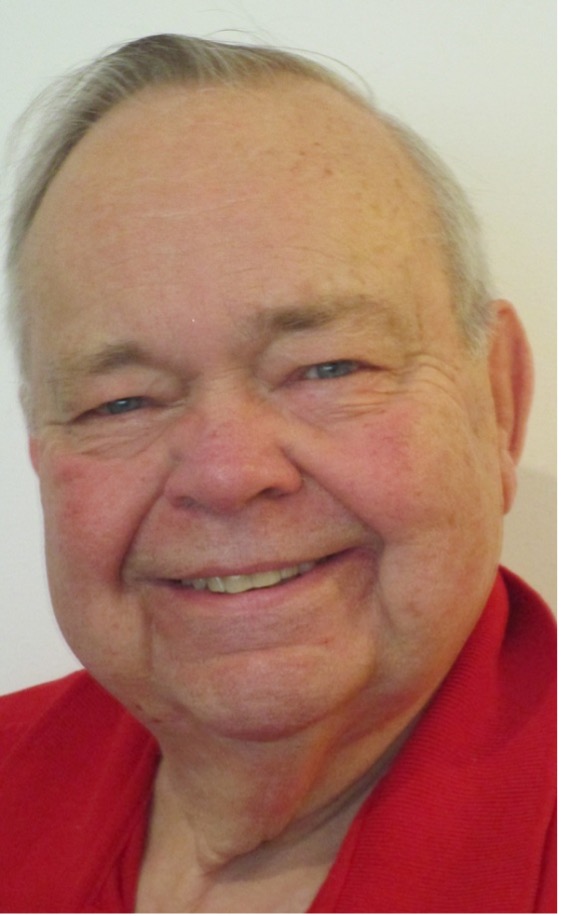
Dave Ackmann is a member of the Gateway Division of the NMRA in St Louis, Missouri, where he serves as the Chairman of the Achievement Program. His railroad is the Baden, Vogt & DeSmet, a 250 square foot freelance layout in HO, utilizing DCC. Dave has received the AP Certificates of Structures, Electrical Engineering, Author, and Volunteer, having taught over 60 live and virtual clinics since COVID. He holds a Bachelor’s degree in Mechanical Engineering, a Master’s in Computer Science, and particularly enjoys creating model railroad structures using 3D printing.
Clinics:
Making Round Things
As 3D printers become less expensive and more prevalent, leading edge modelers are making some fantastic custom industrial and commercial buildings, but most of them are flat walls glued into rectangular shapes. But the prototypical world is full of Round Things like water tanks, barns, silos, corrugated and arched roofing, circus tents, rotating signs, detail pieces and even rolling stock. 3D printing makes Round Things possible, and even fun.
This clinic demonstrates how Round Things can be modeled in TinkerCAD, OpenSCAD, and custom Generator software developed by the presenter. It is suitable for beginners and intermediate modelers; some exposure to 3D printing is desirable, but not essential. Award winning models will be shown.
So “don’t be a square”, roll on in and join the fun of creating Round Things.
Randy Allio, MMR
My serious Model Railroading adventure started with a copy of the November Model Railroader Magazine purchased from a news stand in 1964. Since then, I have modeled in HO, Sn3 and On30. I am currently building a large, double deck, Dead Rail On30 layout based on WV logging and mining. I am also working on a small Hon3 traveling layout to showcase what can be done using Pan Pastels and how small Dead Rail can be used.
Clinics:
Painting With Pan Pastels
In this clinic I will demonstrate using Pan Pastels to color stone and brick, paint detail castings, stain wood, weather roofs and siding, weather track, and create stencils. I also will have structures on display that were done with examples of using these techniques.
Tips For Building Craftsman Kits
In this clinic I cover the description of Craftsman Kits with several examples from multiple manufacturers. Covered will be structure kits, rolling stock kits and kits for scenic elements. Covered will be basic tools needed and materials needed but not normally included in the kit. Also covered will be the steps that I go through to build and display the kit, whether on the layout, or on a shelf.
Kevin Anderson, MMR
I joined the NMRA in 2019 prior to attending the National Convention in Salt Lake City, I earned my MMR in Dec 2023. I model in both N and HO/HOn3 scales. N scale is in free-mo modules and HO is my home layout is proto freelanced point to point, configuration, The Utah Railway Silver Mountain Sub with a focus on both the Utah Railway and Denver and Rio Grande Western.
I am currently employed as a railroad passenger conductor by Amtrak out of Salt Lake City UT.
Clinics:
Scratch Building: A Necessary Evil
Come follow along and view the journey to building an awesome free-moN module based on a WWII training airbase ca: 1943 where the B29 Super Fortress Enola Gay and Bocks Car trained located in western Utah.
Bruce Arbo
My interest in N scale started at 12 years of age, with the purchase of an Atlas (Rivarossi) n scale ATSF passenger set.
I became an NTRAK member and modeler in the late 1980’s while living in Austin, TX, and continued in NTRAK after moving back to my native MS/AL Gulf Coast area.
My interest in T-TRAK was piqued on a trip with my wife, Denise, back to the Austin area, in 2014, to attend a Lone Star NMRA regional convention.
Upon returning to Alabama I began building T-TRAK modules in earnest, and formed CATT- Coastal Alabama T-TRAK; we’ve co-ordinated and participated in T-TRAK events across the greater Southeastern Region.
I was asked by Kato USA to partner with them at various train shows by providing a T-TRAK display at their manufacturer’s booth.
After participating with Fay Chin at the 2017 NMRA’s National Train Show, we decided to form The National T-TRAK Layout in order to provide a large T-TRAK presence at the National Train Show.
My particular focus in model railroading is creating prototype scenery, detailing locomotives and rolling stock, and try to bring that to my T-TRAK module builds.I’m honored to be a National T-TRAK Layout co-founder, and, with my wife, Denise, also a T-TRAK modeler, we enjoy traveling throughout the US, attending and participating in various shows and layouts as well as immersing ourselves in the culture and history of the area.
Clinics:
T-TRAK – Thinking outside the oval
A discussion of T-TRAK Layout design; showing that T-TRAK layouts can be as varied as one’s imagination and, in no way, are restricted to a basic ‘oval on a table’ that so many believe.
B
Frank Baker, MMR
Model railroading has been a lifelong hobby. My current railroad, the Morristown & Erie / Western Division, has been under construction for the past thirty years and has numerous scratch-built structures. My passion is scratch building structures and creating memorable scenes. The railroad was published in the 2019 MR Great Model Railroads and can also be seen on You Tube. I have been an NMRA member since 1995 and held several officer positions including newsletter editor, Director of the Arizona Division and sales / marketing for three regional Arizona Conventions.
Clinics:
Scratch building Structures
Join Frank Baker MMR, as he covers the basics of scratch building structures in this riveting clinic. This clinic covers all the scratch-building topics that you want to see from design, proper bracing, and all ether way through to finish materials. Frank has been modeling his whole life and loves to share tips and tricks he has picked up along the way.
Bryan Barnt
Brian has Life Member of the NMRA since 1986 and a member of the Technical Department at the national level since 1993. Brian served as the DCC Working Group chairman from 1995 to 2003. He has been Electrical Department chair since 2006. He has been involved in the design of the tooling for metal gauges since 2004 and invented the modern clearance gauge adapters. He also currently serves as the NMRA LCC/OpenLCB liaison.
Clinics:
Hands-On Grade Crossing using LCC
This clinic consists of a presentation about Layout Command Control (LCC), and how LCC modules (I.e. nodes) are used on the layout. The second part of this is a hands-on clinic, the attendees will configure a grade crossing with block detection using LCC demonstration modules. Tasks include configuring block detectors to start and stop grade crossing road signals.
Participants will learn how block detectors, push buttons, panel indicators and lams are configured with LCC modules.
This is a condensed (and cheaper!) version of the LCC Clinic at the National Convention in Texas and the MCR Convention in Dublin.
LCC Demonstration nodes & USB cables will be provided. Please note that this is _NOT_ a make & take clinic. We need these nodes for future clinics.
Participants will need to bring a laptop computer with JMRI PanelPro (OpenLCB/LCC tools) installed and running.
This clinic is limited to ten (10) participants; Cost is $0. (Yes, it’s free.)
Stefan Bartelski
Stefan first became interested in model railways through his grandfather, who modeled in TT scale and was starting to scratch build in what later became N scale. In his early teenage years, he developed scenery and structure building experience for an HO, and later a slot car layout. After a couple of aborted attempts at modules during his working life, he finally joined a modular HO group at retirement. This spurred his efforts to start on a permanent layout, which is currently half finished in his basement. Along the way, in addition to the usual model railroad skills, he has developed skills around animation (Arduino programming, etc.), photo manipulation (for backdrops), 3d designing and printing, operations (using JMRI). He has presented clinics on these topics to his home division, the Piedmont, as well as at an SER Convention.
Clinics:
How to Use AI in Model Railroading
Artificial Intelligence (AI) has quickly become a buzzword in today’s world. In this session you will hear some suggestions on how these tools can be used in our hobby. A brief overview of the following topics will be given:
AI tools – what is out there, how to use them, pros and cons
Research – Prototypes, modeling techniques, electronic circuits
Image generation – Backdrops, figures, structures, logos
3D Printing – Creating print files from images
Animations – Programming Arduinos & Raspberry PIs
Harold Berenzweig
Like so many others my interest in trains began in childhood. While I remember my older brother’s Lionel O27 loop of track it wasn’t until middle school that I started to seriously investigate it as a hobby. I think my interest was stimulated by riding in the front cars of the New York City subways. My first summer job was at Polk’s Hobbies in Manhattan. That enabled me to buy equipment at “employee discount”. I had a small basement layout through high school after which college, medical school, marriage, and small children took their toll. I had small layouts but nothing serious until finally moving to Texas. Although a longtime life member of the NMRA I was pretty much a lone wolf modeler until about 10 years ago when I started attending Division 1 meetings in Fort Worth. Since then, I have become progressively more active, volunteering to help at the 2023 National Convention. Currently I model modern BNSF pictures of which can be seen on the cowcatcherdivision.org website.
Clinics:
Grain Transport and the Railroads
The “Grain Transport and the Railroads” clinic will trace the growth of the North American grain industry from the mid 1800’s to the present as well as its synergistic relationship with the railroads. It will highlight technological advances in both industries and how they fed on each other.
Drayton Blackgrove
Drayton Blackgrove is a model railroad industry professional and filmmaker with a lifelong interest in railroad history. Originally from Jackson, Michigan, he has lived in the Chattanooga, Tennessee area since July 2019, where the region’s many busy rail lines and deep railroad heritage continue to shape his body of work. As a Brand Marketer with ScaleTrains and Virtual Railfan, Drayton uses his audio-visual talents to tell stories about model trains and the prototypes.
Drayton is also the founder of Delay In Block Productions, a railroad-themed YouTube Channel with over 250,000 subscribers, where he has produced documentary-style videos focused on railroad operations, infrastructure, and preservation since November 2011. His work centers on telling honest, well-researched stories about railroading—both past and present—and sharing them with the world.
A passionate HO scale modeler, his proto-freelance “Drayton & Southern Railway”, a G&W corporate line, has garnered a following on social media. When he’s not chasing trains or dreaming up a new modeling project, Drayton enjoys spending time with his wife, Rachel, and their 2-year-old daughter, Avery.
Clinics:
Railfanning In and Around the Greater Chattanooga Area
Come visit with Ed Painter and Drayton Blackgrove as they share the prime rail-fanning spots in and around the Greater Chattanooga area. Feel free to ask questions as these two are experts on the subject.
Carl Blum
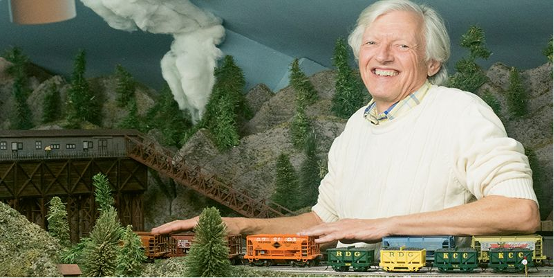
I have had trains since I was a toddler. In 1996 I started sharing Operations on Jim Behling’s RR. Jim helped me build my own Misery & Short Life RR. We have been operating our railroad on average of 6 hours a week. With the Charleston Model Railroad club, we started the local Train Show that has been going for over 20 years. When Les Colna wanted help wiring his layout we developed PVC terminal strips. Model Railroad Hobby Magazine published an article on how to build and use these terminals.
Clinics:
PVC Terminal Strips
An easy to build wiring method that is easy to use and change. Requires no wire stripping or soldering. The white PVC strips are also easy to mark. Very low cost.
In the clinic I discuss various wiring systems and advantages of each. Then I demonstrate the PVC strips and allow hands on time for the participants. I bring several buzz boxes for continuity check to give as “door prizes”.
Dick Bronson
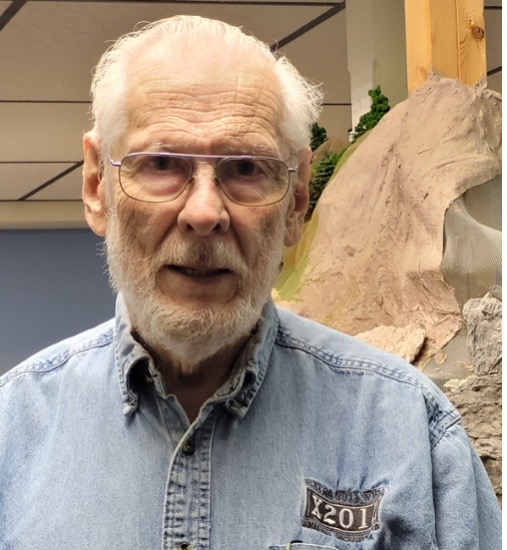
My first layout was 3 sections of Atlas fiber tie track. (with steel rail as I remember it) on a 1 x 4 board. My first engine was a Penn Line D-1 Whitcomb Diesel switcher. I installed my first operating semaphore signal shortly later on the club layout that met at the San Mateo County fairgrounds. It was forcibly removed shortly thereafter by one of the ‘Adult’ members in order to extinguish it. Hopefully I have learned a few things since then.
Clinics:
LCC 101
What is LCC? Where did it come from? When was it created? How do I get started? Why would I even be interested? Who is it for?
Craig Brotman
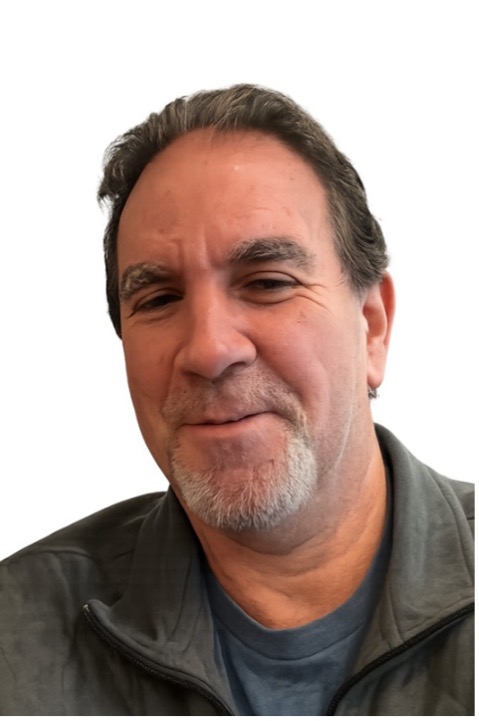
Craig Brotman is the creator of Craig’s Modeling Corner, where he shares techniques for building realistic structures and dioramas inspired by America’s gritty industrial past. Specializing in concrete, asphalt, rust, and heavy weathering, Craig teaches modelers how to add authentic texture and character to their layouts.
Through clinics, social media, and his YouTube channel, he demonstrates practical methods that help hobbyists achieve greater realism in HO and O scale modeling. Craig also collaborates with industry leaders such as AK Interactive and Martin Welberg Scenery to showcase weathering products, scenery materials, and innovative modeling techniques.
Through his work, Craig’s goal is to help modelers bring realism in scale to every project.
Clinics:
Realism in Scale Modeling Concrete, Asphalt & Urban Weathering
Concrete streets, cracked sidewalks, oil-stained loading docks, and weathered asphalt are some of the most overlooked elements on many layouts—but they are also some of the most important for creating believable scenes. In this clinic, Craig Brotman of Craig’s Modeling Corner demonstrates how to transform plain surfaces into realistic urban environments full of texture, age, and character.
Craig will walk through the process he uses to create convincing concrete and asphalt, including techniques for building subtle surface texture, realistic cracks, color variation, and the effects of years of wear and weather. Using simple tools and layered techniques, attendees will learn how to model stains, dirt buildup, rust marks, and other details commonly found in industrial areas.
The clinic also explores how these techniques can be applied to streets, sidewalks, foundations, and loading docks to give structures and dioramas a more authentic setting. Craig will demonstrate the same methods used in his highly detailed dioramas, incorporating products from AK Interactive and Martin Welberg Scenery.
The goal is simple: help modelers move beyond flat surfaces and bring true realism in scale to their layouts and dioramas.
Realistic Scenery from the Ground Up
Join Craig Brotman for an engaging, step-by-step clinic on creating realistic scenery for dioramas and model railroads. Starting from the ground up, Craig will demonstrate how to build convincing scenic layers, select and apply the right materials, and use proven techniques to achieve natural-looking, award-winning results. Attendees will gain practical tips they can apply to their own layouts, whether they are enhancing a small scene or developing a larger model railroad environment.
C
David Carlton
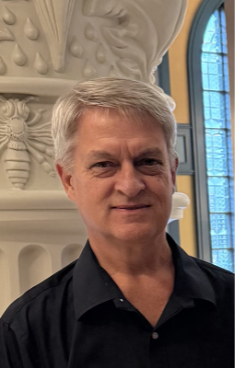
My background is in solder. I am a retired Quality Engineer and I worked for the US Army for over 35 years. My primary job was program support, giving technical support and advice about soldering on various weapon systems. Early in my career, I was certified as a MIL-STD-2000 Solder Instructor. That certification allowed me to teach soldering at the DOD solder certification school at Redstone Arsenal. We trained the “trainers”; the students who graduated from our school were certified as contractor instructors who would go back to their places of employment and subsequently train their employees who did the actual work on the production floor.
After teaching soldering for about 12 years, the DOD changed the way they did business. Part of the change required the DOD certification schools to “get out of the certification business.” The military certification programs were then transitioned to industry, and at the same time, the military solder specifications were replaced by the industry solder standard, J-STD-001.
When the teaching part of my career ended, I continued supporting various weapons systems. During the second half of my career, I was the Subject Matter Expert for Electronic Assembly and Circuit Board Manufacturing for the MLRS rocket system and the TOW and JAVELIN missile systems. During this time, I also was a member of the industry committee that managed and maintained the J-STD-001 industry soldering specification.
I have a lot of knowledge and experience when it comes to soldering. I am more than happy to share what I know with any model railroader who needs to learn how to solder.
Clinics:
The Art of Soldering
Do you think soldering is difficult? Do you find it frustrating? Then this clinic is for you. This clinic will show you how to improve your soldering skills so that soldering becomes a fun and useful part of the hobby. This clinic will teach you the fundamentals of hand soldering and present several tips and tricks to make the soldering process much easier for you.
Madison Castle
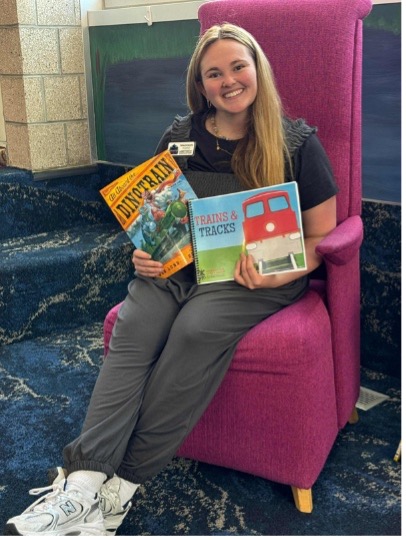
Madison Castle is a passionate educator, photographer, SCUBA diver and global traveler dedicated to inspiring the next generation of model railroad enthusiasts. She brings curiosity, creativity, and a spirit of lifelong learning to all that she does.
She earned her degree in Elementary Education from the University of Northern Colorado, with an endorsement in Cultural and Linguistic Diversity and a focus on teaching English as a Second Language. Madison has taught preschool, first grade, and fourth grade in both public and private school settings, always prioritizing inclusive, student-centered learning.
Madison discovered her passion for model railroading while working at the Colorado Model Railroad Museum under the mentorship of Michelle Kempema. What began as a college position managing the front desk and retail store quickly grew into a meaningful career path.
After graduation, she broadened her global perspective through the Semester at Sea program, where she lived aboard a ship, traveled internationally, and taught children on board. This experience deepened her commitment to education, cultural connection, and hands-on learning.
Today, Madison serves as the Director of Youth Programs at the Colorado Model Railroad Museum, where she inspires young learners by making model railroading accessible, engaging, and meaningful. Through her work, she continues to empower youth, build community, and spark a lifelong love of learning, one young railroader at a time.
Clinics:
Inspiring Young Railroaders
Dive into the exciting world of youth programming in model railroading and discover the power of inspiring the next generation. This high-energy, interactive clinic will show you how to connect with young audiences, spark their curiosity, and turn that excitement into a lasting passion for trains and creativity.
Explore practical tools and proven strategies for engaging your community, designing meaningful and memorable learning experiences, and confidently stepping into youth-focused outreach. From first introductions to long-term engagement, you’ll gain ideas you can put into action right away. Whether you’re just getting started or looking to grow an existing program, this session will leave you motivated, empowered, and ready
DC Cebula
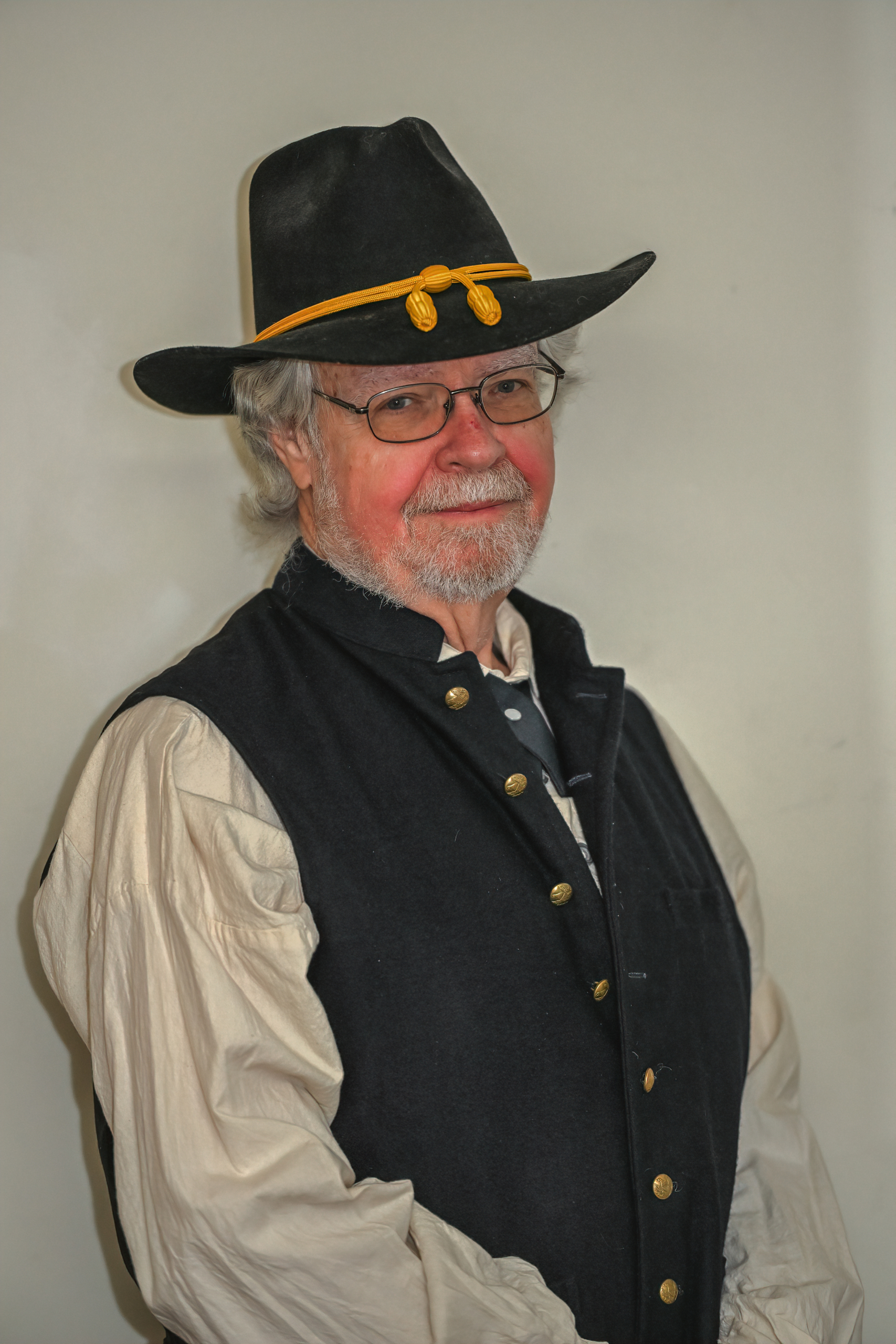
Credentials
- Instigator and eventually co-founder of the American Civil War Rail Roads Historical Society
- Group owner & Lead Moderator, of the American Civil War Rail Roads Historical Society at civilwarrailroads@groups.io (previously on Yahoo groups)
- Photographer, presenter/clinician, & author on American Civil War railroad topics
- Produced and published calendars for the ACWRRHS
- Collector and preservationist of ACWRR artifacts
- Builder & owner of the HO scale freelanced Delaware Central Rail Road and Navigation Company
- Co-builder and main troublemaker on Thom Radice’s HO scale “north branch” of the Western & Atlantic Railroad
- Publisher of a blog on the HO scale DCRR & Navigation Company at delawarecentralrailroad.blogspot.com
Background
- Returned to hobby in late 1970s to operate trains around Christmas tree…. some might say things got out of hand.
- Grandfather had worked for Pittsburg & West Virginia RR out of Avella, PA
- As a boy, my grandfather took me to look down at trains switching the yards far below in Holidays’ Cove, Weirton, WV
- Scale trains around Christmas tree and in attic as boy. Modeled HO scale model buildings
- Collected Civil War Trading Cards while others collected baseball trading cards in the 1960s
- Worked on a track gang for C&NW in early 1970s
Clinics:
Scratch Building the City Point Engine House from Historic Photos
How do you model a prototype when no written documentation exists? This presentation covers the process used to scratch build the USMRR engine house at City Point, VA, using historic images. Subtopics include locating photographs, analyzing/interpreting said photographs, filling in “the blanks,” materials used, construction techniques & jigs, remodeling the model in light of newly uncovered information, and what I might do differently (and why).
Marvin Clemons
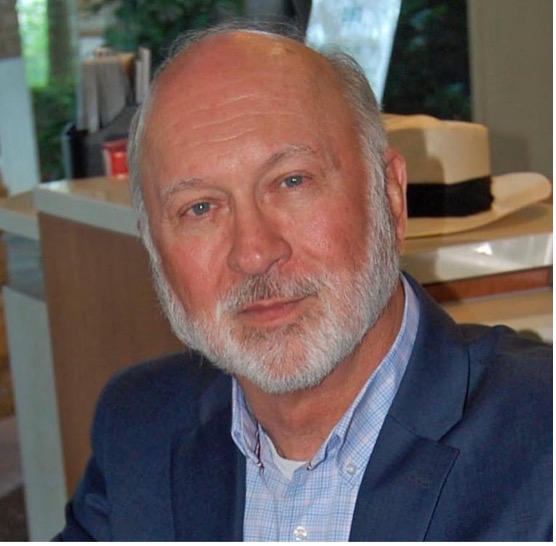
Trains have always been “my thing.” At age four I received a Marx tinplate that rattled around a small oval. I later graduated to HO with a 4’ x 8’ layout, which became the extent of my modeling experience as my interest shifted to prototype railroading and photography.
My first railroading experience occurred when my family moved from rural Florida to Birmingham, Alabama. The Birmingham district was teeming with trains, from mainline to industrial short lines, and I started train watching at busy Woodlawn Jct. tower at the junction of the Southern and Central of Georgia railways.
The tower had a local telegraph wire to Birmingham’s Terminal Station, and I began practicing Morse code with the operator at the station’s control tower. That led to an invitation to visit the station, where I was allowed to cub the towerman position controlling the ten-track interlocking plant while working with five different dispatchers. I qualified in August 1964, working off the extra board before transferring to Atlanta Terminal Station for a regular towerman position.
The following year I was drafted into the Army, serving five years on active duty before returning home to find that both Atlanta and Birmingham Terminal stations had been demolished. With my plans for a railroad career literally in rubble, I opted for a career in journalism and continued to pursue railroading through writing and photography, authoring several railroad books including “Great Temple of Travel,” the first book- length history of Birmingham Terminal Station. The book became the source for a permanent exhibit on Terminal Station now housed in Southern Railway’s 1884 depot in Leeds, Alabama.As part of the exhibit opening, I presented a program detailing the station’s daily operations from the perspective of the control tower operator. A few local modelers attended the program and felt it offered valuable insight for modelers interested in incorporating prototype operating practices of a major passenger terminal from the 1960s. I am delighted to be offered the opportunity to present that program to the NMRA convention in Chattanooga.
Clinics:
Modeling A Day in the Control Tower
Controlling train movements through a major passenger railway terminal in the pre-Amtrak era involved the efficient handling of passengers, mail, and express by remote interlocking in coordination with multiple switching crews, railroad dispatchers, and adjacent control points for inbound and outbound trains. Join former towerman-operator Marvin Clemons during a typical first shift at Birmingham’s Terminal Station in the mid-1960s, coordinating up to 100 movements though the station’s interlocking plant with up to three active switch engines, all while working with dispatchers covering train movements over five rail lines serving the station. The experience will provide fresh insight into modeling prototypical operations of a major passenger rail terminal from the era.
Chuck Coggins
I am a retired senior structural designer. I have been in design and drafting for my entire career. Like most model railroading enthusiasts, I started enjoying trains with a Lionel train set in my early teens. I have been in model railroading since 1978 modeling the Pennsylvania Railroad in June of 1955 in HO scale. I enjoy both kit bashing and building train engines and cars from kits like Ambroid and Bowser. I started 3D printing when a co-worker showed me a simple house made for HO scale. I bought my first 3D printer in 2018 and with my design background I was off and running. I have printed designs for many people from a web-based platform called Thingiverse. I design and produce many projects for modelers who are looking for out of production pieces or designs for structure not available.
Clinics:
3D Design and Printing
Demonstrate how to design model train structures and cars. Available 3D softwares to design various models. Differences between various 3D printers.
Jack Copeland
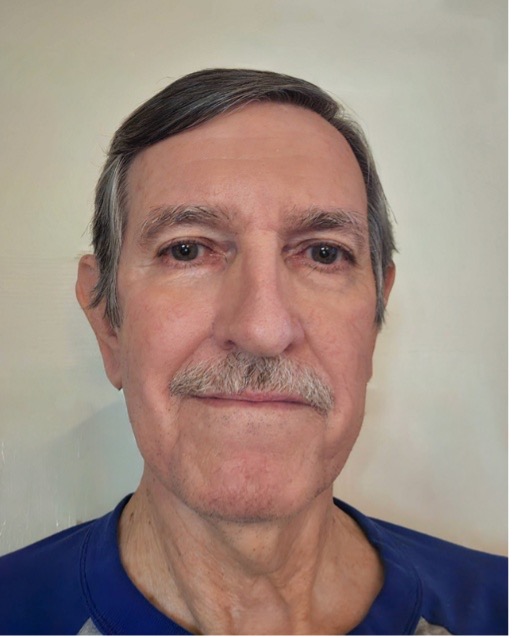
I received four train sets from Santa by the time I was twelve. Three were Lionel O Gauge and the fourth was Lionel HO. I definitely had a good start in model railroading. Then came High School, an Engineering Degree from Clemson University, marriage, 2 children and a career as a civilian working for the Navy and Air Force. Life settled enough around 2000 for me to take another look at Model Railroading. I bought a Model Railroader magazine, started on an HO garage railroad, and joined the NMRA. Through the NMRA, the Southeastern Region’s Empire Division Superintendent found me. Within months, I was a member of the Middle Georgia Model Railroad Club. The club had several members who preferred N scale. By 2010, N scale and DCC had progressed to the point where I decided to construct an N scale railroad in the basement. The development of operations is documented in an article I published in the OPSIG Dispatcher’s Office Journal, “A Beginner’s Time Table & Train Order Adventure.” This “Copeland Division” of the Southern Railway now hosts monthly Timetable and Train Order Operations, featuring JMRI generated switchlists for freight car movements. So, I am now a model railroader with a deep interest in operations.
Clinics:
Freight Car Operations for T-TRAK
We are using JMRI Panel Pro Operations to generate freight train manifests. Our T-TRAK displays have progressed from running trains continuously on the Red and Yellow tracks, to freight car switching operations largely on the Yellow track. We will show you how our T-TRAK modules become the data used by JMRI Ops, and how we are able to generate manifests as needed, real time.
Mike Cummings
Mike Cummings has been a member of NMRA since 2015. He has served as Director of Personnel of the Piedmont Division; Secretary of Southeastern Region and Assistant Secretary of the National Board of Directors. He served as the Secretary of the NMRA 2021. Mike grew up on a branch of the Erie Lackawanna and worked for the Morristown & Erie for a couple of years in the locomotive shop. He models the Erie Lackawanna, D&H and the CNJ in Northeastern Pennsylvania in 1970. Mike enjoys operations, scratch building structures and cars, steel mill modeling and researching railroad and Civil War history. Mike is married and has three grown sons.
Clinics:
Fallen Flags of the Southeast 1957 thru 1982
Tracing the period of mergers, acquisitions and bankruptcies that forever changed the railroad industry in the Southeastern US. Beginning with the Seaboard System / Family Lines, this is a fast-paced journey for rail fans covering the development of the Southern, the Mississippi River Valley roads and finishing with highlighting some Southeast railfan favorites. Ample photos and maps are used to be clarity to the topic while catering to the rail fan in all of us! This will cover all the railroads that led to today’s NS, ICG and CSX systems.
The Great Locomotive Chase – April 12, 1862
Most of us railfans and model railroaders learned about the Andrews Raid long ago by watching the Buster Keaton classic or the Walt Disney take on the event starring Fess Parker, released in 1956. But what happened during the planning, the chase and afterward? Let’s take a fresh look at this iconic event with a focus on the Western & Atlantic Railroad, and its operations that day which impacted the raid that ended some 15 miles from the convention center. The six surviving raiders were the first recipients of the newly approved Congressional Medal of Honor upon their release in a prisoner exchange in March of 1863.
D
Chuck Diljak, MMR
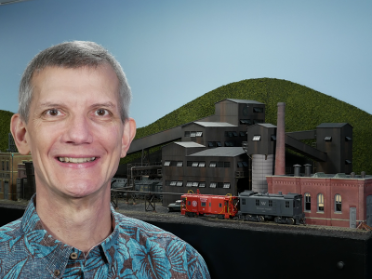
Growing up along the Lehigh Valley Railroad and later attending college in Pennsylvania’s anthracite region, Chuck developed a lasting interest in the area’s railroads and mining industry. He is building a freelance HO-scale layout, the Wyoming Valley. A member of the NMRA since 2005, Chuck has served in numerous roles, earned MMR #682 in 2021, and has been published in Railroad Model Craftsman, NMRA Magazine, and the NER Coupler.
Clinics:
Not Way Freight…It’s Weighing Freight!
Do you have an industry on your layout that ships a commodity? Do you have a scale to weigh those cars? Chuck models the anthracite region of northeastern Pennsylvania, and while researching the industry he discovered that the mines used scales to weigh hopper cars. In this presentation, Chuck shares what he learned about scale tracks, scale houses, and scale test cars—and shows how to incorporate them into your layout’s operating sessions, whether you use car cards or switchlists.
John Doering
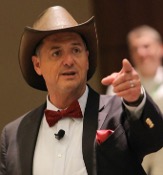
John Doehring is crazy about all things model railroading and trains. John is an active modular layout railroader, and he especially enjoys operating sessions wherever he can. He models primarily in N (normal) scale, and he’s active with the National NRail BoD, his local NTrak club, and in FreemoN. John has also served on his NMRA Division BOD, as a Region President, and now as Eastern District Director for the National organization of the NMRA, and he is a primary author of the Association’s new Vision 2030 outlook and plan.
Clinics:
NMRA Vision 2030: The Jurney Forward!
After several years of discovery, discussion, and design, the NMRA has now revealed its all-new vision for the future– and a path forward to becoming the world’s premier association for the growth and enjoyment of scale model railroading. We’ve outlined both aspirational objectives and specific goals that further define this vision – and we’ve detailed several strategies that will help us get there. Still, there is much work to do ahead, and almost none of it will be easy. Now, in 2025 we’ve kicked off our first of the tactical workplans we’ll sequence each year to keep ourselves focused on action and results. Please join this informative but informal discussion led by Eastern District Director John Doehring and NMRA President Gordy Robinson – and add in your ideas, insights, and inspirations for how we make the NMRA truly premier!
The Pennsylvania Midland Railroad: Dreams, Plans, and a Build Ahead
Like many armchair railroaders, I’ve dreamed about my layout for years – and planned all the details a thousand times. What I’ve built (so far) though is an education, family, career, and life – but not much on the railroad. I have spent many years in volunteering, administration, and leadership in the hobby’s associations, that has been rewarding on its own – but now it’s time to build my empire. My interests are varied, and include transition-era anthracite railroads, and the industrial and urbanized areas around New York City. Add in a longtime fantasy road (the Pennsylvania Midland), a primary interest in model operations, and a near-religious zeal for all things N-scale-and it all comes together in my big dream: a plan for a double-decker basement empire. No matter your own interest: rail lines like the LHR, LNE, CNJ, DLW, or RDG; model layouts in N scale; details of operating schemes; generalized layout design; or just talking a potentially manic, overthinking idiot off a dangerous ledge – please come and join us for an hour of fun – and hear one armchair railroader’s plan for a final escape.
E
Leslie Eaton, MMR
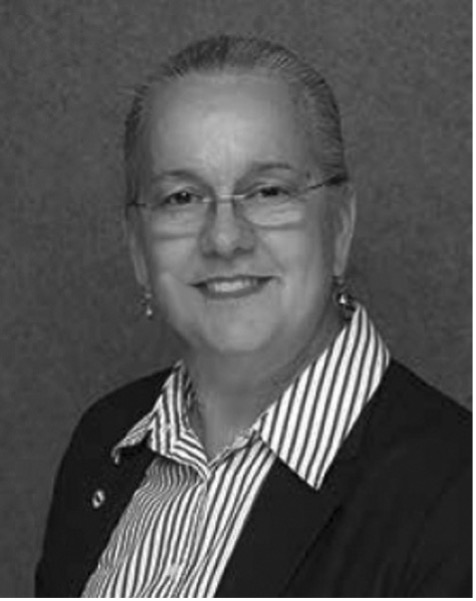
Leslie Eaton MMR is a well-known Master Model Railroader and a retired NASA engineer. Best known for her Tips & Tricks for Scratchbuilding and Kitbashing tool clinics, she developed the Real Deal Weathering Kit and Real Deal Scenery Paint Set that is used by modelers of a wide variety of hobbies. Eaton has been teaching clinics for over 25 years. She received the NMRA President’s Award in 2017.
Clinics:
Tips and Tricks for Scratchbuilding and Kitbashing
Learn about new and unusual tools and techniques to improve your scratch building and kit building skills. A review of the top tools to pick up for your toolbox at the National Train Show, including creative uses for each tool and easy techniques to help improve your scratch building and kitbashing skills. Appropriate for modelers of all scales and levels — beginners through MMRs. Please bring a pad and pen for notes.
Dr. Bill Eberle
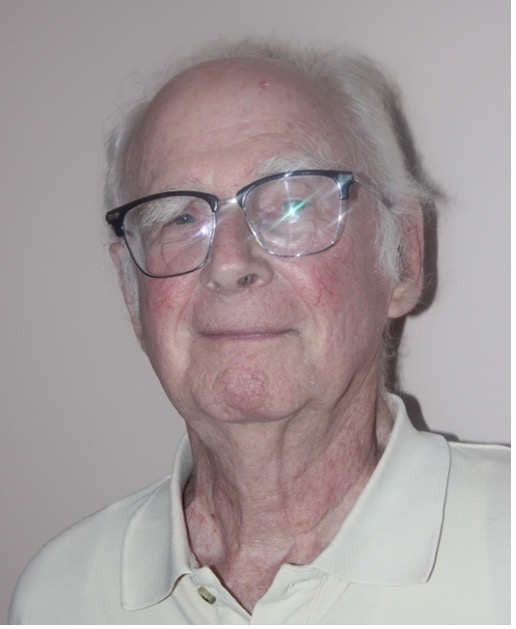
Dr. Bill Eberle began his interest in trains and model railroading with receiving a Marx freight train in 1945. He graduated to American Flyer seven years later. Dr. Eberle studied engineering at Purdue University and graduated with a PhD in aerospace engineering. He worked in research and development of advanced aerospace projects until his retirement. Since his retirement he has been building the Todd Mill & Wildcat Creek Railroad which is a dual gauge railroad located in the Rocky Mountains in the early 1950s. Bill lives with his wife, Ardis, in Huntsville, Alabama. She is an accomplished painter who has created a spectacular backdrop for his railroad. They have four children and seven grandchildren.
Clinics:
Scenery Methods
In building scenery for his Todd Mill & Wildcat Creek Railroad, Bill has developed several innovative techniques and materials for modelling interesting terrain, especially in the modeling of interesting land contours. He will demonstrate these techniques and discuss other techniques which he has found to be useful in creating interesting scenery.
Phil Edholm
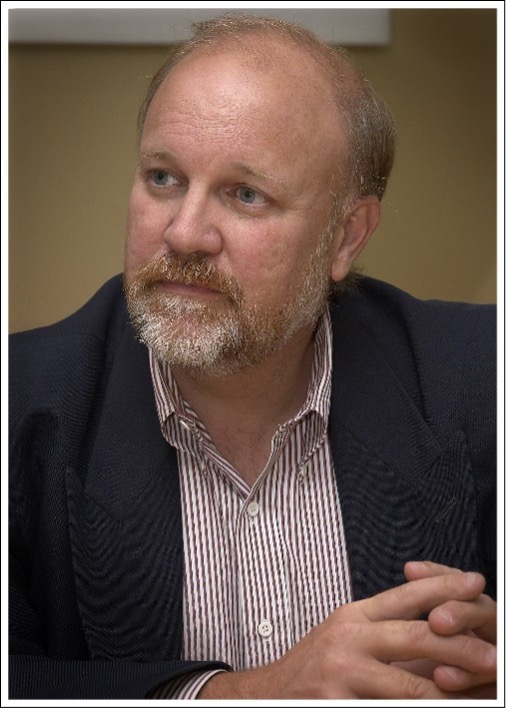
Phil Edholm is an active model railroader. He is part of the California Central Coast On30 Modular group and the ACCRS club that operates layouts at the Alameda County Fairgrounds. While his primary focus is on O and On30, Phil also models in HO. He is currently building a medium sized modular/fixed On30 layout at home.
Phil enjoys structure modeling, scenery, weathering and operations. Phil has completed his Golden Spike and 5 AP Certificates towards his MMR. Hie structure models won first and second place at the 2024 NMRA and 2023 PCR conventions. Phil is the Vice President of the Pacific Coast Region and Superintendent of the Coast Division and is helping drive the NMRA and railroading forward as a hobby.
Clinics:
Building the Agnew/Pajaro Depot in O Scale
Join Phil Edholm as he details the process of building a model of the prototype Agnew Station in Santa Clara. The Agnew Station, built by the South Pacific Coast Railroad in 1877, was once known as the railroad stop for the “Great Asylum for the Insane”. It was a station stop for the Southern Pacific Railroad until 1963 when it was purchased by the California Central Model Railroad Club. It now houses their impressive HO scale layout. The Agnew/Pajaro station model is an accurate rendition of the Agnew station, slightly compressed in overall length to fit the available area and renamed Pajaro to fit the central coast geography on Phil’s layout. In the clinic, Phil will detail prototype research and design of the model, and designing and 3D printing the unique doors, windows, and architectural details. He will also discuss how he used photo printed interiors, designed in PowerPoint and printed as 4×6 photo prints, with 3D filament printed interior details to create a model that is great for viewing through the large windows. Finally, he will detail painting, weathering, assembly, interior lighting and building the roof for the model. This is a scratchbuild with several techniques that can be used in creating and enhancing your own models.
Using PowerPoint to Make Modeling Images and Designs
This clinic will cover methods and ideas to use PowerPoint as a drawing tool to create a number of modeling projects. The clinic will discuss how to use PowerPoint tools, how to set up large slides for high-resolution images and how to manage objects in large slides spaces. Phil will also cover how to use PowerPoint for general design and archiving materials (images, historical, concepts, etc.). Phil will demonstrate how to output image files using different printing options, generally not a home printer. The clinic will cover how to generate high-quality laser decals, photo quality images for signs, posters, etc., generating building flats in larger scales and other useful applications around the railroad.
Jack Ellis
Have been scratch building structures for 50 years
Have built five almost complete layouts (layouts are never done)
Have won awards in structures at the Division, Regional and National level
Have won the Baldwin Trophy at NER regional three times (Best in show)
Have given clinic on several topics at NMRA Division, Regional and National Conventions
Have judged NMRA model contest at the regional level
Have my structure certificate award toward my NMRA MMRR
I was the President of the North Conway Railroad Club for five years
Designed and built most of the large waterfront scene on the NCMRR club layout
In 2006 Started building the test fitting kits for Bar Mills Scale Models
Have built several of the kit dioramas for Bar Mills
Have done the basic design for several Bar Mills kits
Designed and Scratch Built 9 Structures for Bar Mills Sn2 layout
I have been doing video and audio clinic for the Bar Mills Web site
I’m now building my sixth layout. Based on Dave Fray’s (Now Jimmy Deignan’s) Pennsy Middle Division in HO in a 14×12 room. With a little simpler track plan which gives more room for structures and scenery. I have already built 40 structures and four dioramas for the layout. My other hobbies are restoring old British sports cars, Ski Racing, RV traveling and three grandchildren. I travel a lot giving clinics and attend Model Railroad Shows all over the US.
Clinics:
Signs
We will discuss all kinds of signs. Talk about the purpose of the signs. Tips on what not to do with signs. Where to find signs on the Internet and what to look for. Thinning sign for the painted sign on buildings. Stencil Sign, Poster signs, billboards and hand painted signs. How to apply signs in windows. How to build signs with the computer. With some file shots of building with signs. We will give you a link for a download of a 12-page handout.
Details Make the Scene
The clinic covers Adding details to Structures to make a scene. How to choose a color for your structures. Distressing structures wall and painting. Painting brick, stone wood and stucco walls. Adding different roof materials. Make your own signs. Adding window and roof details. How to make your own detail parts. Plus, lots more. We will give you a link for a download of a 40-page hand out.
Mike Engler, MMR
Mike Engler is a life member of the NMRA and has been as active member for over fifty years. During his career he has been a national officer and a TLR region board member. He is an event planner and was convention chairman for several region conventions. He is an accomplished model builder and has achieved many model contest awards including annual Best of Show models 12 times in the Thousand Lakes Region.
Structures and dioramas and Mike’s specialty and a sawmill diorama was Best Display in a NMRA national convention, and it also was Best of Show in the National Narrow-Gauge Convention the same year. He built another NNGC diorama of a railroad camp that also became an NNGC best of show.
Mike has had many feature articles and photos published in national hobby magazines and reviews new products for them. He also has presented several clinics at NMRA and NNGC national conventions and in three different NMRA regions. He is currently combining many of his small dioramas and structures into a modular layout.
Clinics:
The Devil is in the Details
Mike will share the techniques, tools, decorating materials and planning he used to get your modeling to the next level. He will take you through the process of making models contest worthy. But most importantly the many things you can do to provide the detailing necessary to build scenes for dioramas and layouts big or small.
F
Whit Fancher
Whit has been interested in trains since he received his first Mantua train set at the age of 5 or 6. During his youth, he modified or kit bashed many steam locomotives and ready to run models, scratch built numerous cars and structures all to go on his 4 by 8 layouts. He is the owner of Crown Landscape Services and Loco-Motive-Hobbies. Some people say he is an S.O.B. – no not what you are thinking! He Sells Or Buys model trains etc. He has been selling and buying on eBay since 1998. Originally, he was going to sell under the name Locomotive, one word, Hobbies but his mother convinced him to change it to Loco-Motive-Hobbies as Loco means “Crazy” and Motive means “Reason,” so he then had a “Crazy Reason” for the hobby sales! He is currently the largest reseller of the Funaro & Camerlengo line of craftsman resin car kits in the world!
Whit is a Life Member of the NMRA and is currently the President of The Wrecking Crew Model Railroad Club in Birmingham, AL. He is also the Superintendent of the Steel City Division of the SER. He began selling model trains seriously as a business in 2000 after returning to Birmingham from Auburn, AL.
Clinics:
How to be an S.O.B. on eBay!
Since Whit has the reputation for being a S.O.B., he felt was only fitting to give a presentation on how to be a Seller or Buyer on eBay. Some of the topics include the following:
- Creating Your Listing – Researching the item; Templates; Selling Formats; Pricing; Knowing your costs including item, listing and final value fees, Packaging, Shipping, Overhead etc.; Creating a title; Descriptions; Shipping & Handling; creating a Shipping Label; Feedback etc.
- Knowing Your Fees – Basic & Optional Fees including listing and final value, Store Subscription types including an explanation and examples of each and what works best and when to upgrade.
- Photos / Images – Basic and minimum requirements including quantity, photo size etc.; How to take good pictures and using photo enhancement tools such as cropping, positioning, scanning; using stock photos etc.
- Selling Tools – A brief description of various available listing tools and apps, various shipping services and when to use each etc.
- Buying – Many of the techniques use for selling apply to the buying or purchasing items on eBay. Whit will review what works for him in procuring many items at ridiculously inexpensive prices. He will review how to use key words in searches, how to get notifications for saved searches, tricks to getting items at discounted rates etc.
Steve Flowers
My journey of being a model railroader started as it does with many other modelers, a Lionel train set at Christmas time. As an Army BRAT, we moved a lot, so I graduated to an HO set that was tacked down to a plywood base in order to slide under my bed. My Senior year of high school, my Journalism class had a yearly assignment. We had to write to our favorite magazine, of course mine was Model Railroader at the time. While others in class got rejection letters, I was fortunate enough to be published in MR in the February 1991 issue, in the Student Fare.
I’ve built a couple of different layouts over the years, but not until after I got married did my passion really grow. My wife and I moved into our starter home and I built, with the help of a small army, a 20’x 40’ double-decked layout. With over 1000 ft. of track and over 100 switches, my Paducah & Louisville Railway empire was born.
Then a job change. I had left CSX Railroad in Nashville, TN for the Canadian National Railways (ex-IC) in Memphis, TN in 2008.
I joined the NMRA in 2007 but wasn’t active at all. In 2018, after years of not seeing much in the way of NMRA progression in our area, I decided to step up and become the Superintendent of the Bluff City Division of the Southeast Region of the NMRA. We have had a large learning curve and are slowly gaining momentum and membership.
I am currently on the SER Board of Directors and serving as the Special Interest Group coordinator for the 2026 NMRA National Convention in Chattanooga, TN.
My current layout is a prototype based on the Paducah & Louisville’s Mayfield District in HO Scale. It is 17’x 19’ in a bonus room above my garage. It is operated with Digitrax DCC and using JMRI Operations for switchlists. I model from the day the P&L took over from the Illinois Central Gulf in 1986 until present day.
Clinics:
Operations on the Paducah & Louisville Railway
My clinic, Operations on the Paducah & Louisville Railway, will be based on information that I have gathered from Day 1 until the present day. We will cover train names, territory covered, industries served, with engines and cars used to serve such industries.
Bob Frankrone
Bob Frankrone has been a model railroader and a member of the NMRA for over 35 years. His model railroad, The Louisville Southern Line, has been featured in a couple of model railroad publications and continues to be a work in progress. Bob is the author of the series “Love Those Loads” appearing bi-monthly in the NMRA Magazine. He has presented countless clinics over the years at both regional and national NMRA conventions. Bob lives in Louisville, Kentucky and is a member of Division Eight of the Mid-Central Region, NMRA.
Clinics:
Love Those Loads
Most model railroaders love open loads. Bob’s clinic features a variety of open load models that can be built from commercially available kits or easily scratch built from basic materials. Beginners and master modelers alike will enjoy learning how to create interesting and realistic open car loads. With plenty of photos from both the prototype and HO scale models, Bob’s clinic is always a real crowd pleaser. Bob is the author of the “Love Those Loads” series featured bi-monthly in the NMRA Magazine.
Joe Fugate
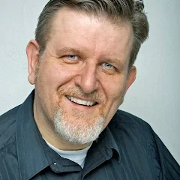
Joe Fugate has been an avid model railroader since getting his first train set at age 8. Joe founded MRH Media and started Model Railroad Hobbyist magazine in 2009. His HO scale Siskiyou Line layout was presented in depth in the January and February 1997 Model Railroader magazine. Joe received the NMRA Distinguished Service Award in 2022.
Clinics:
Painting in a Post-Floquil World
Stash of Floquil / PollyScale running out? Get weaned off Floquil / PolyScale and map the familiar colors to other model paints. Also, tips / tricks for airbrushing, brush painting, washes, and storing paints to last longer.
Make It Run Like A Dream – Locomotives
Want your locomotives to run as good as (or better than) they look? Joe Fugate shares several decades of learnings and expert advice for getting and keeping your locos running as flawlessly as possible.
Track Cleaning
Find out what causes the black gunk on our rails and how to reduce it. Get at least a year of flawless running between track cleanings!
G
Allan Gartner
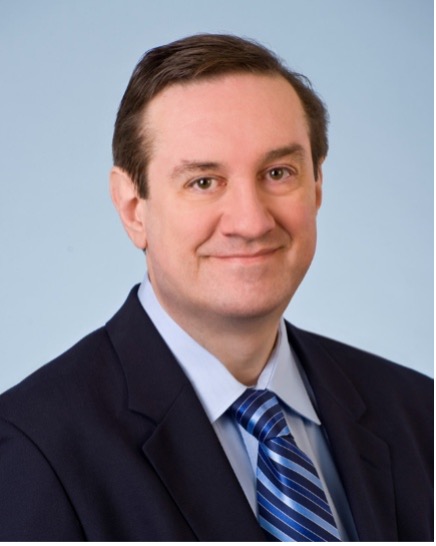
Allan Gartner has been interested in model railroading and electricity since elementary school. He is also an active ham radio operator. Allan has worked as an electrical and computer engineer in the telecommunications, robots, and defense industries. He has been writing about DCC on his website, “Wiring for DCC” https://www.WiringForDCC.com since 1996. He authored Model Railroader’s “DCC Currents” column for three years and written the Firecrown Media book, “DCC and Model Railroading.” His objective is to help modelers new to DCC to be successful in properly wiring their layouts.
Clinics:
DCC Reversing Demystified
When properly implemented, reversing situations on layouts with DCC can be one of the greatest benefits this technology offers. DCC reversing seems to be the biggest single challenge that modelers face that don’t have the information they need. This clinic describes what DCC reversing is, considerations necessary for implementation, how to wire it in a wide variety of situations, and concludes with a survey of available DCC reversing electronics.
Doug Geiger, MMR
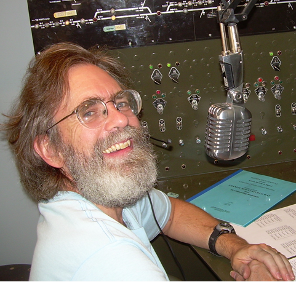
Doug has had many articles, reviews and editorials published in various model railroad publications. He was a contributing editor for 12 years for Model Railroading (“Ding”) magazine, is currently writing for Railroad Model Craftsman, the NMRA Magazine and the Steel Mill Modelers Journal and has given many clinics at both regional and national NMRA conventions. His large HO/HOn3 Granite Mountain Railway has been featured in several magazines and videos.
Clinics:
CTC Demystified 1 – An Introduction to Centralized Traffic Control Machines
Ever wondered about how a ctc machine worked or have wanted to implement a ctc machine for your own layout? From the 1930’s through the 1980’s, ctc machines were commonly large, relay-driven consoles used to move trains efficiently and safely. Using photos taken from a recently restored 1955 Union Switch & Signal ATSF-style ctc machine, this clinic will help you understand the basics of how those machines functioned. Definitions and photos of actual ctc hardware will illustrate how a typical dispatcher used a ctc machine. Model photos taken on the HO-scale Granite Mountain Railway are used to show how certain signals change when various ctc levers and buttons are operated.
CTC Demystified 2 – Advanced Features and Concepts of Centralized Traffic Control Machines
As a follow-on to part 1, this clinic will explore many of the more advanced concepts of centralized traffic control, including: preconditioning, fleet, and call-on to name just a few. Auxiliary ctc machine equipment, such as the line meter and blocking devices plus others will be discussed and shown. Like part 1, the clinic uses model photos to illustrate prototype concepts and operations of various ctc hardware running a model railroad layout. We will also spend some time learning how relay logic actually worked to control switches and signals on a prototype railroad by using only two wires via codes. If you are thinking to expand your own ctc machine in a prototypical manner or just want to learn more about centralized traffic control machines, then attend this clinic to discover these features.
Deborah Gifford
I am a nurse by profession with a passion for art. I have been painting since I was a child. Life, raising children and a career didn’t leave much time for hobbies. Now with the children grown I have more time to get back to painting and other hobbies. To be honest I was tricked into model railroading. My husband was building his first layout that is an N scale Utah and Lake Powell desert scene. He was trying to paint the rocks and to my artist’s eye was missing the mark. So next thing I know I’m painting and carving rocks and mountains on not only the N scale but an HO scale layout of the Black Hills SD. While I do believe it was a classic man trick to pretend to not know how to do something, I can’t be mad because it sparked my creative nature and I fell in love with the artistic side of model railroading. It also pushed me to improve my painting skills and to enter several of my paintings in the arts and crafts category at both national NMRA conventions and LSR conventions. I have won several first places in the arts and crafts category and railroadania. At LSR Blues Express I won first place in both general and railroadania as well as best in show and most popular in arts and crafts. The winning painting was accepted to be in the Louisiana Steam Train Association new museum in Garyville LA. Set to open 2026. How well my art has been received at the conventions is what has given me the confidence to pursue selling my art. I have now had several of my paintings at local galleries and have done many commissions.
Clinics:
Backdrop painting – Creating depth with clouds and landscape
I will go into the basics of an easy way to create realistic looking clouds using acrylics. Then with use of light and dark in landscape to create depth.
Russell Gifford
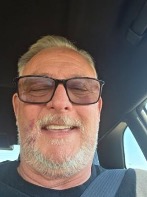
My interest in the model railroading hobby started in 2020 wanting to put a train running around a Christmas tree. Not knowing much I had a rather large learning curve. I was looking for information on the internet and wanted to learn more about what I was attempting to do. I noticed that there was a train show in Plano, TX. It was information overload and I was asking dozens of questions of everyone I met. On my visit I met Mike Mackey, the division 1 director at the time, and my wife and I joined the NMRA that day. After my first meeting I was hooked and entered my first competition at the LSR convention in Temple. Texas the next year. To my surprise, I won best off-line structure, best Trees and most popular. From that point on I wanted to really work on my skills and teach others what I had learned in the process. Over the past 5 years I have won many awards including “best of Show” at the division level and 8 different awards at the National level using some of the techniques I have learned, and will be teaching you today. I encourage everyone to be a part of the contest room; it will make you a better modeler, I promise!
I have engineering background in the commercial and industrial HVAC / Plumbing industry for over 36 years. I have a passion for detail and the ability to be creative with solutions. I also have a passion for all types of art using all types of mediums; this is what helps me to be a better model railroader.
Clinics:
Make It Rusty
I will show you how to do the basics of turning something new into a rusted up, dirty, well used item. I use basic acrylic paints, weathering powders, sponges and brushes to put down a layer of rust that takes Mother Nature years to create. This is a basic how-to but with a little practice you can make your models look years old.
Animate Your Layout
I will introduce you to a system I use called MagnaRail. With this very simple system you can have your cars moving down your roads, boats on the lake, people walking, tractors plowing a field or any other item you want to move around the layout. In this clinic I will also show how it is installed and demonstrate many different items you set into motion with a tabletop unit.
Harvey George
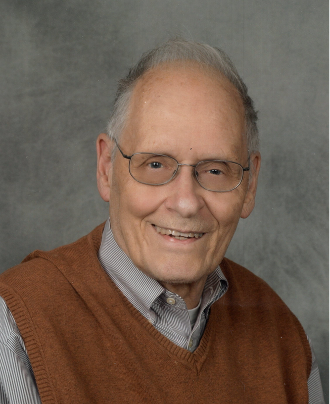
I think I was born with a fascination for everything railroading. I built my first piece of rolling stock, a Norfolk Southern (the old one) wooden boxcar from scratch at the age of 14. Income from mowing neighbor’s lawns didn’t allow for anything more elaborate than what I could build myself. That car still runs today. I took my first prototype photo, a Southern Ry. F7, in 1961 and have built up a collection of tens of thousands of photos since then. They have been featured in Extra 2200 South, Lines South, Southern Pacific Annual, Trains, Model Railroader and several books.
I graduated from NC State University with majors in entomology and botany. My railfanning colleagues are amused when I spend my time photographing insects while we are waiting for the train to come. Later I earned a Master’s degree in business from Boston University. After graduating from NCSU, I received a commission in the US Army where I served for 23 years. After retiring from the Army, I formed a company performing medical logistics and health facilities planning with clients all over the world. My Army and work experience provided me with opportunities to experience rail operations in very exotic locations. I am currently Associate Editor of Lines South magazine.
My interest Decapods and Russian Decapods in particular, began when I saw a brass model made by United and imported by Pacific Fast Mail in a hobby store. It was just a bit exotic and perfectly sized for work on a small to moderate model railroad. Even though they were built for Russia, these locomotives were very American having been mused on 32 different lines in the US. I was hooked and have since visited every surviving Decapod in the US and many overseas.
Clinics:
Russian Decapods and Their Kin (3 Part Series)
Part 1, The Russians Are Coming
This part summarizes the limitations in decapods built before the Russians, and why they were considered obsolete by 1910. It discusses the factors leading to the development of a decapod design by the Russians and the need to obtain them from the USA and Canada. It describes the effects of the Bolshevik Revolution and what was done with the stranded locomotives.
Part 2, Russian Decapods on the Atlantic Coast Line, Seaboard Air Line and Subsidiaries
This part provides the pedigrees of All the Russian Decapods used by The ACL, SAL and their subsidiaries. It includes multiple photos of these locomotives in operation.
Part 3, After the Russians
This part focuses on the Baldwin stock light Decapod that was built to perform the tasks that the Russians were successfully performing. It includes the pedigrees and multiple photos of these Decapods in operation. Then it describes a resurgence of Decapod production brought upon by the success of the Russians. It describes designs produced in the US and then compares successful designs worldwide. Finally, it lists all the surviving Decapods in the US.
Unfortunately, this presentation does not provide pedigrees of Russian Decapods outside of the Southeast. Developing the pedigrees of all the Russian Decapods that remained in the US would require huge undertaking and a presentation would require far more than the time available.
Bob Ginger
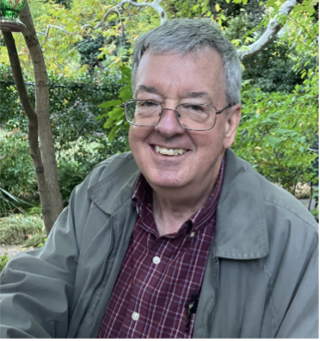
Bob Ginger and his wife Gail live in Phoenix, AZ. Bob has been an avid model railroader since the age of seven, when he found his father’s American Flyer ‘O’ scale trains under the Christmas tree followed two years later by a small Arnold Rapido ‘N’ scale train set. At the age of eleven Bob started building his 3’ x 6’ N scale B&H railroad featured in the Student Fare section of the November 1974 issue of Model Railroader.
College, career, and marriage delayed attempts to build a new layout until a romantic October dinner in Vermont when Gail convinced Bob to build a small ‘N’ scale layout together. Soon after completing the small layout, he started building the much larger ‘N’ scale Pepper Valley Division featured in the June 2019 issue of Model Railroader and several Walthers catalogs. Bob joined the NMRA in 2019 earning his Golden Spike in 2020, and his MMR in 2021.
Bob has also written operations articles for the NRail Newsletter, NMRA AZ SpurLine, and OpSig Dispatcher’s Office publications. He is also a past member of the Arizona Model Railroading Society serving as N scale superintendent and Board Chair. He has presented NMRA clinics to both local and national audiences. Bob enjoys helping others in the hobby and hosting operating sessions on his layout. He is a certified Couples Communication instructor and he and Gail have been blessed with opportunities to mentor married and engaged couples.
Clinics:
An Introduction to Mentoring
This clinic explores how meaningful mentoring starts with simple introductions and authentic human connection, growing into a lasting relationships and active participation in the hobby. It reframes mentoring as distinct from teaching or coaching, emphasizing that true mentorship is about walking alongside others, building trust, sharing life experiences, and fostering personal growth rather than simply transferring knowledge.
Participants will learn how mentoring naturally develops through relationships, thrives on encouragement and effective communication, and creates lasting impact by developing people, not just skills. The session also highlights practical ways to engage in mentoring, the importance of creating a culture where it happens organically, and the broader benefits of preserving knowledge, strengthening community, and building a legacy that extends far beyond model railroading.
Improving your layout design for more interest and better operations
Looking to make your layout more fun and more interesting? This is a clinic for daydreaming of possibilities. Bob shares years of discovery and modifications to his Pepper Valley division as a backdrop to explore ideas to change trackage, structures, scenery, operations methods and paperwork. Jump aboard this journey meant to generate ideas you can incorporate in your existing or soon to be existing layout.
Gail Ginger
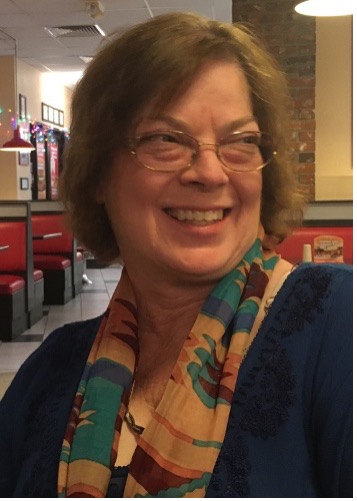
Gail Ginger and her husband Bob live in Phoenix, AZ. Gail is an avid railroad fan and loves exploring American, European, and ancient history. Many years ago, over a romantic autumn dinner in Vermont, she convinced Bob to get back into model railroading. After building their first layout together, she still doesn’t think Bob spends enough on trains. Gail enjoys visiting model railroad layouts and making new friends around the country. She is always happy to have folks over and provide lunch when she and Bob host ops sessions on their Pepper Valley Division layout. Gail is a certified Couples Communication instructor and she and Bob have been blessed with opportunities to mentor married and engaged couples.
Clinics:
An Introduction to Mentoring
This clinic explores how meaningful mentoring starts with simple introductions and authentic human connection, growing into a lasting relationships and active participation in the hobby. It reframes mentoring as distinct from teaching or coaching, emphasizing that true mentorship is about walking alongside others, building trust, sharing life experiences, and fostering personal growth rather than simply transferring knowledge.
Participants will learn how mentoring naturally develops through relationships, thrives on encouragement and effective communication, and creates lasting impact by developing people, not just skills. The session also highlights practical ways to engage in mentoring, the importance of creating a culture where it happens organically, and the broader benefits of preserving knowledge, strengthening community, and building a legacy that extends far beyond model railroading.
Joey Giunto
Joey has been model railroading for over 25 years. His business and model railroading journey can be found on many social media platforms from YouTube to TikTok. TOTB Model Weathering has been bringing models to life since 2017. He has been featured on A Modeler’s Life Podcast, What’s Neat This Week, Around the Layout Podcast, and Model Railroading Live. Joey also participates in the NMRAx Virtual Clinics. His work was featured on many manufacturer’s pages including Scale Trains, Walthers, Broadway Limited Imports, Bachmann, MicroScale and MicroMark. Joey is excited to meet and share with you his passion and services to bring your own models to life.
Clinics:
Through the Eyes of the Weatherer
“Through the Eyes of the Weatherer” will give you an insight on how to look at the world through weathering eyes. We will discuss examples of the prototype and models describing the different weathering made by location, environment, weather and aging. Also, some easy techniques will be presented to start your weathering journey.
Charles Goodrich, MMR
Charles is a retired mechanical engineer and enjoys re-designing drives for his O scale models. He also likes scratch building and painting both structures, locomotives and rolling stock.
Charles has been modeling all his life. As a child he started as many others with a 4 X 8 Lionel layout. Not being happy with Lionel because the ties were too far apart, he changed to HO when in junior high school. This was influenced in part by a large HO layout that was sponsored by the Kansas City Southern Railway at the Louisiana State Fair. He was further inspired by the models of Louisiana industry at the Louisiana State Exhibit Museum in Shreveport.
After a move associated with a job change Charles decided to change scales in pursuit of his love for the Colorado Narrow Gauge. He sold his HO collection and started over modeling in On3. As he was building his new layout, a friend challenged him to look at the NMRA achievement program. He started collecting achievement certificates and in five years he had his Master Model Railroader #229 plaque.
Charles currently models D&RGW narrow gauge and standard gauge set in the early 1950’s but his period and local are a bit flexible as he likes Southern Pacific/Cotton Belt from the period when he first started seriously modeling in the late 1960’s. During this period SSW was running locomotives from every manufacturer including Alco’s, GE’s, EMD’s including the big DD-35’s and U-50’s. The big engines would come into Shreveport most days on the evening train from Houston.
Charles is also an avid railroad photographer and likes showing his photographs of trains to anyone that will watch. He has a passion for steam power, but diesels are game too, especially older ones. His photography and writing skills has led to publishing many articles in the major model magazines.
The NMRA has contributed a lot to his modeling enjoyment. After a move to the Dallas area, it was at the Division 3 NMRA meetings where he met many of his close friends in the area
Clinics:
Sixty Years of Railroad Photography
Charles started seriously photographing trains in the late 1960’s so he would have a record of what railroading was all about so his model railroad would accurately reflect the prototype. A trip to the Reader Railroad in South Arkansas introduced him to steam railroading which became a lifetime passion. Charles has traveled coast to coast photographing trains. Although the clinic has a heavy content of steam railroading there is a lot of diesel action too. Although many of the diesel photographs are from around Shreveport, La (his hometown) there are pictures of roads across the country.
Howard Goodwin, MMR
My involvement with the hobby started at a very early stage in my life, you might even say
embryonic! My father, God rest his Soul, a returning WWII vet, met and married my mother, after his discharge and I’ve been told that I was conceived in the upper berth of a Pullman car on the way home to Florida from Canada where they met.
My AP involvement started early in 1992. While active in my club in Florida, the Lauderdale Shore Line Model RR Club, I earned my Volunteer, Official and Author certificates. I had been writing a club newsletter for the Journal Box, the Sunshine Region newsletter as well as several other articles for the NMRA Bulletin. At that time, I had no real aspirations of becoming an MMR. I knew several MMRs in the Region but was never approached about the AP program so I just filed it away.
Skipping ahead to 2000, my retirement from the Bell System and consequently moving to the
Atlanta Georgia area to follow my son Tim and his wife Mary’s trail of babies. It wasn’t long before I found the local NMRA group, the Piedmont Division. It was amazing, a division of then over 400 members who met regularly and provided many activities for the membership. This was nothing like what I had in the SSR and a totally new experience for me. I was blown away and compelled to get involved.
I served the Division as Director of Operations, then Superintendent, then Director of Personnel and as a regular Board Member, a position I currently hold. During this time, because of the mentorship of several Division MMR’s I started to reapply myself to the AP and in 2015 completed my journey to MMR becoming #556. I have earned certificates starting with the Golden Spike, then achieving certificates of Master Builder- Cars, Structures, Model Railroad Engineer- Civil, Electrical and Chief Dispatcher in addition to my earlier certificates of Association Official, Volunteer and Author. It was a long journey from 1992 to 2015, but it wasn’t so much about the destination but the Journey!
Clinics:
Adding an animation to your layout
This clinic will attempt to show you how you can add a simple animation to your layout that will
add interest and visual appeal at a reasonable cost. If you like to build structures and such this could give you an opportunity to expand your skills.
By using relatively inexpensive parts you should be able to:
Create a working electronic system of crossing flashers using Logic Rail Technologies components for under $100.
There are many ways to incorporate the actual crossing signals themselves, by purchasing the
units already built from sources such as Walthers or construct the signals from scratch
using materials listed in the handout. Once upon a time, you could purchase Grade Crossing Flasher kits from a company, Oregon Rail Supply but no longer in business but occasionally you can find them online, a bit pricier than original cost but has everything you need to construct a pair of crossing flashers that look really nice.
Keep in mind that parts can be had from many online sources. I built a few signals using Bachmann non-operating crossing signal just to get the signal heads, removed the plastic lenses and drilled them out for 3mm LEDs. I also found parts on eBay that made the job a lot easier, that looked a lot better and were very nicely in scale. We will go over how and where you can locate these parts if you wish to construct your own crossing flashers.
Tom Gordon
Tom has been involved with model railroading since his first train set at 4 years old. He models the Seaboard Air Line between Atlanta and Birmingham in late 1954, and particularly enjoys the electrical aspects of the hobby. He worked with computers since the late 1970’s, quickly migrating to personal computers as they were introduced. He applies many computing technologies on his layout incorporating Arduino’s, JMRI, C/MRI, PC’s, Raspberry Pi’s and anything that might strike his fancy at the moment. Making things modular and easily maintainable has always been important, and his clinics reflect this never-ending, and sometimes successful, attempt to make technology maintainable, while mostly hidden from the operators.
Clinics:
Easy Small Cheap Trackside Control Panels
Through many years of trial and error, and observation of other folks’ approaches, an easy & cheap approach to constructing small (4″x4″) local trackside control panels for turnouts and other locally controlled items was devised. These panels are not only simple to build, but they are also designed to allow removal and replacement for future enhancements. They are constructed with inexpensive materials mostly available from Amazon and local home improvement stores, along with the use of computer printed graphics. Detailed instructions on how to construct these panels will be presented and parts lists will be made available.
Note: This is different from the larger Plexiglas based panels I have shown in past clinics – and much, much easier!
Rob Green
Rob Green began his model railroading as a young kid. His love of trains started with his dad and grandfather. Rob was introduced to Athearn blue box kits and Mantua steam locomotives and loves to build trains and buildings. To this day, Rob still owns and operates his first Mantua 2-6-0 and Athearn Blue Box SW12.
His priorities changed while in high school and college. However, while in college, Rob watched trains go by his dorm room. On one particular day, Rob saw a train loaded with Army M1 Tanks and thought that would make a great model train. In 1998 Rob was commissioned as a Lieutenant in the Army and reported to Fort Hood, TX. While driving to work he observed a BNSF train at a railroad crossing and remembered he had trains. Later that day he found the local model train shop in Killeen, TX. Lieutenant Green volunteered to be the Unit Movement Officer and supervised loading Army trains four times in his Army career.
Since 1998, Rob continued with model trains and participated with seven model train clubs and groups wherever the Army sent him. In 2008, Rob deployed to Iraq and began building a military train loaded with M1 Tanks, M2 Bradleys, Humvees, and 5-Ton Trucks. The train now includes two Bradley Companies, a tank company, one paladin battery, a M777 Howitzer Battery, and several support vehicles.
Rob shares the hobby with his twenty-year-old son, Matthew, since Matthew was two years old. Rob and Matthew have been integral members of the Sipping and Switching Society of Virginia since 2023.
Clinics:
How to Load Military Trains
Rob will discuss the process the Army uses to determine how to load military vehicles on trains and the process of doing so. If time permits, he will discuss how he chains down military vehicles on his 1/87th scale railcars. I’ll bring my 16 feet of military railhead modules, “Fort Green” to the clinic for a visual aid.
H
Eric Haffner
During the 1950’s, Eric grew up in Philadelphia, about two blocks from the Erie Avenue freight yard. Trains were there every day, on the way to school, and on the way to Church on Sundays.
There were trains under the Christmas tree when the family was young. Later, Dad built a 4 x 10-foot layout in the basement. Dad’s workbench was right by the train layout so the kids had access to all types of tools. Innovations and inventions were always forthcoming!
So, what do you do when you encounter a problem; you resolve it. In 2019, while upgrading Rivarossi passenger cars Eric lost a #80×1/8th flat-head screw from Kadee’s #451 coupler pocket. It was gone; forever! No hobby shop that had that screw in stock, so Miscellaneous Railroad Company was born.
Every Miscellaneous Railroad Company product is a solution for a problem. The main product focus remains as passenger cars. Miscellaneous Railroad Company now has over 50 passenger car interiors, and recently, an interior for the Walthers ‘White Tower Restaurant’.
Clinics:
UPGRADING YOUR PASSENGER FLEET
Do you model passenger service? Do you have a named train? Every “class 1” railroad had their named trains, and those trains received the best of care. What kind of care does your passenger train deserve? This presentation will illustrate several approaches to upgrade your passenger cars with much less pain and work than originally anticipated. This presentation will explore upgrades to Rivarossi (and clones) and Con-Cor 85ft passenger cars, and Athearn and Con-Cor 72ft passenger cars.
You would be truly astonished at the appearance of an Athearn or Con-Cor 72ft passenger car riding on Walther’s passenger car trucks! And don’t overlook the body-mounted couplers!
. . . Then add a Miscellaneous Railroad Company interior! All your railroading buddies willnotice!
Doug Harding, MMR
NMRA member, MMR #676, owner and builder of a large (28×70) HO layout. Modeling the Minneapolis & St Louis in 1949 across Iowa. Published author and clinician known for Meat Packing, livestock and other industry studies. Doug likes to research and collect vintage photos of railroad subjects and rail served industries that may be found along the layout.
Clinics:
Layout Design Bootcamp
“Make only” is the short (2 hour) version of “Layout Design Bootcamp” in which Layout Design Special Interest Group (LDSIG) leaders will guide you through a process that will lead to a satisfying layout design. We’ll cover the conceptual (“What Story do you want to tell”), structural (“what to include, what to delete, how do I fit all this stuff into my space?”) and detail (“track plan and industry layout”) phases. It’s an iterative process but we’ll provide an example of how one builder got there! Bring your notebook and start with the big picture!
Paul Harms
Paul Harms grew up in California where he developed his fascination with the Western Pacific Railroad. It’s also where he learned his career skills in construction and engineering, which turned out to be useful in his hobby of choice. He was fortunate enough to live in Grand Junction, Colorado for a time, which was just an excuse to visit the extensive number of railroads in that region (and to own a house with a basement). For the last 10 years, he has resided near Austin, Texas, where he has also now adopted the Missouri Pacific as another favorite. One of his favorite aspects of our hobby is weathering and realism, but without getting lost in the weeds of being a “rivet counter”. He will be sharing these things during this clinic, while also reminding us that this pastime is still supposed to be fun.
Clinics:
Freight car upgrades and bang for the buck weathering
If you are looking to do photo realistic rust effects and contest level weathering, this is NOT the clinic for you. There are so many aspects to this hobby and our time is limited. So, the focus here is to do what I refer to as “general effect” weathering, although, if time permits, I might add in one or two intermediate methods.
The freight car upgrade methods are a mix of operational, aesthetic, and durability improvements (the latter which are necessary to Paul because he has grandchildren around on a regular basis). Much of this clinic is geared not towards those who are already “experts”, but to those that are newer to certain aspects of model railroading.
Brandon Harper
I am an East Mississippi native from Meridian, MS with my love for railroads starting as a young child growing up with the Meridian and Bigbee Railroad running through my front yard. In rural MS, the highlight of my young day was waiting to hear the train horn blow at the crossing about a mile away from my home and the anticipation of headlights coming into sight. The love of railroading stayed with me throughout the years even as I transitioned into a career in law-enforcement. I spent nine years as a Deputy Sheriff in Lauderdale County Mississippi, and when the opportunity came to apply for a Special Agent position with Norfolk Southern, I jumped on it. I was fortunate enough to get hired and combine my two passions, which are law-enforcement and railroading. I have been a Special Agent for the past 10 years and every day I still look forward to seeing those headlights come into view as I get the opportunity to help protect Norfolk Southern rail infrastructure!
Clinics:
How to Railfan Safely and not Break the Law; Advice from a Railroad Cop
A day track side is always a lot of fun. The trains are rolling and we all want to get that perfect picture or video at the right angle and in just the right light. This clinic will give you tips on how to do so safely without endangering yourself or stepping over the legal lines into trespassing, etc. and what to do if you have an encounter with railroad police in the field. There will also be a Q&A portion of the clinic for the group to have a discussion on anything railroad law enforcement related.
Frank Haugh
Frank Haugh has been a model railroader since he received his first HO Scale Train Set at 5 years old. A now retired commercial airline pilot, the Ohio resident has conducted numerous model railroad clinics, ranging on topics from operations and structures to weathering.
Clinics:
New Product Announcement: Just Plug Sound System
Do you wish you could hear the sounds of the city, calls from the farmyard animals or music filling the dance hall in your miniature world? Learn how to easily bring your layout to life with the new Just Plug® Sound System™ from Woodland Scenics. Longtime Model Railroader Frank Haugh will walk you through the simple installation of adding pre-recorded or unique sounds to your project and the variety of ways to expand and customize sound with Triggers, Accessories and more! Discover how to make any project a realistic, immersive sound experience with the Sound System!
Bernard Hellen
Bernard Hellen is the founder of miniprints, a manufacturer of 3D-printed miniature figures, animals, and details for model railroaders. Known to many hobbyists as “dr. mini,” Bernard combines a lifelong passion for model railroading, scenery, and storytelling with modern 3D-printing technology to help modelers create more believable and engaging miniature worlds.
What began as a search for an HO scale beaver to complete a scene on his own layout eventually grew into miniprints, which now offers thousands of products used by modelers around the world. Bernard has presented clinics for NMRA divisions, conventions, and online events, sharing practical techniques for adding realism, detail, and visual storytelling to model railroads.
Clinics:
Why We Model: The Hidden Science Behind the Hobby
Most modelers know the hobby feels rewarding, but few have seen the research behind why. This clinic explores what psychologists have discovered about flow state, creativity, mastery, stress reduction, and social connection—and why model railroading happens to combine many of the ingredients most closely associated with human wellbeing.
By the end, you’ll see model railroading in a different light. It turns out we’re not just building layouts—we’re engaging in an activity that may be uniquely suited to how humans learn, create, connect, and thrive.
J
Bob Jacobsen
After a since-childhood hiatus, Bob returned to model railroading in 1997 with a small railroad built with his kids. Since then, he’s become very interested in railroad signals and control systems, building most of his hobby activity around those. As a retired physicist, he finds the development of prototype technology from the earliest baton signals to modern dispatching systems fascinating.
Much of his railroad hobby time is now spent working on JMRI, LCC and helping others bring those to their railroads. He also really enjoys operating on model railroads and does that every chance he gets.
Clinics:
JMRI Users Group Meeting
Come meet other members of the JMRI community! There will be a brief (1 or 2 slides) introduction to recent and possible future developments, we’ll introduce people, then we’ll open the floor for discussion. Bring comments, questions and particularly bring your suggestions about how it could improve! This meeting at past conventions has been fun and interesting.
Introduction to JMRI and LCC
Layout Command Control (LCC) is a standard for families of products that can be used to control various aspects of your model railroad. JMRI provides tools that can help you get set up and use LCC products. But some people find it hard to get started. There’s so much that it’s hard to know what to do first! This clinic will walk you through the very basics of installing JMRI and connecting it to some LCC boards through doing some basic configuration that will run some switch machines and LEDs from buttons. By the end of it, you should be able to do the same kind of basic operations on your railroad.
Steve Jackobs
Steve is one of the NMRA’s newest Master Model Railroaders, completing his AP journey in 2025. Steve caught the model railroading bug at age 10 from his dad’s hand-me-down diecast and stamped-metal Varney rolling stock. By his teenaged years he was hanging out at the local hobby shop so much they hired him for weekends. After twenty years of college, career, marriage, and family, Steve returned to modeling and began building a layout in half a spare bedroom. Steve especially enjoys creating, building and detailing. He is the current president of the Austin Model Railroad Society and actively promotes model railroading.
Clinics:
Smoke and Mirrors: Model Railroading in Small Spaces
Steve offers tips and tricks to make a small layout seem bigger and operate with as much fun as the big ones. Steve’s layout was featured in the July 2022 Railroad Model Craftsman and the April 2025 Dispatcher’s Office.
Martyn Jenkins
Martyn Jenkins is the Worldwide Director of the National Model Railroad Association, representing members outside North America and helping guide the organization’s global direction. Since joining the NMRA Board of Directors in 2021, he has been actively involved in modernizing member engagement, including contributing to the growth of online education initiatives and digital content.
Based in Queensland, Australia, Martyn is also a passionate YouTube content creator, producing engaging model railway and hobby-focused videos that connect with enthusiasts around the world. His work blends practical modelling advice with storytelling, helping to inspire both new and experienced hobbyists.
With a strong background in education and a commitment to growing the hobby, Martyn brings a practical, forward-thinking approach to both his leadership within the NMRA and his online content creation.
Clinics:
Eclectic Nature of Australian Railways
Australia’s railways are anything but uniform. Shaped by geography, isolation, and differing colonial priorities, each state developed its own distinct railway identity—resulting in one of the most eclectic rail systems in the world. This clinic explores that diversity, with a particular focus on the rich history and operations of Queensland Rail.
From narrow-gauge mainlines and pioneering engineering feats to unique signaling practices and regional rollingstock variations, Queensland’s railways tell a story of innovation born from necessity. We’ll examine how these differences compare with other Australian systems and how they influence modelling approaches for enthusiasts today.
Perfect for modelers, historians, and railway enthusiasts alike, this session highlights how embracing the quirks and contrasts of Australian railways can inspire more authentic and engaging layouts. Whether you’re modelling a specific prototype or capturing a broader “Australian feel,” this clinic offers insights, examples, and practical ideas drawn from real-world practice.
Join Martyn Jenkins from the National Model Railroad Association Australasian Region for an informative and engaging journey into the fascinating patchwork that is Australian railroading.
Greg Johnson
I am an NMRA life member and have modeled in both N and HO scales. My current layout is the N scale Ohio & West Virginia RR. I have been giving presentations at NMRA National Conventions since 1985. For the last 20 years my focus has been on industrial railroads and industrial structures. I have had two previous layouts in Great Model Railroads and one in Model Railroad Planning. My layouts and articles have also been featured in Model Railroader, and N Scale Railroading magazine. I have been building structures utilizing a laser engraver for 10 years.
Clinics:
Designing & Scratch-Building Laser Engraved Structures
Laser engraver/cutters have been around for over three decades. Over the past five years or so, their costs have gone down greatly and are now easily within reach of modelers and clubs. The machines can easily cut common modeling materials up to ¼” thick. The clinic will cover the creation of drawings, the design of buildings and the techniques for construction. Sample buildings will be available for viewing and handling.
Mark Juett, MMR
Mark has been interested in trains and railroads from a very early age. At seven he received a Lionel set for Christmas. By age 15 he had switched to HO scale.
Mark rejoined the NMRA after college and has been a member continuously since. His interest in trains, things mechanical and electrical led to an education in Engineering. Later he went into management and obtained his MBA.
Mark is Deputy Chair to the NMRA Standards & Conformance Department. He is actively involved in the NMRA DCC Working Group, writes the Pulse of DCC column and manages the Conformance & Inspection Team of the NMRA. Mark is Master Model Railroader #660 holding eight certificates and Honorary Life Member 75. Mark has a custom model railroad building business covering all aspects of the hobby and many different types of projects.
Mark models the L& N LC& L sub in September 1967 in HO scale. That is the region where he grew up. It could have been the Southern, C& O, B&O or even the Monon, but the gray and yellow diesels were his first love. The model railroad is DCC and uses Computer Model Railroad Interface to control ABS signals, switch machines, switch locks and yard panels. Monthly operating sessions are hosted on the LC&L sub, dispatched by TT& TO. He has hosted Prairie Rail and Pro Rail OpS.
In 2025 a move required disassembly of the model railroad. Reconstruction in a larger basement is now in the planning stages.
Mark and his wife Lynn have 10 grandchildren and are raising one of them. Two grandsons show interest in trains and model railroads. Mark & Lynn are active in their church serving and teaching. He and his grandson Grayson are taekwondo black belts. Over the last several years, Mark has coached several sports. He likes history, gardening, house projects, shooting sports and helping others. In good weather they get out the vintage Mustang GT convertible for drives or go horseback riding.
Clinics:
Starting Over
There are many reasons that we may begin again, to build a new model RR, or move it. I will share some of my experiences over nine moves and reconstructing my model railroads. Choices in retaining the same scale and gauge or not. Choices in keeping the same prototype and era or not. Selections of modeling the same locations or not. What to retain, what to let go. What will get an operational RR more quickly. What was learned in past attempts. How to make the next RR better and how to make only new mistakes.
K
Roy Kaiser
I am a retired Bridge Engineer with 30-1/2 years of service with CSX Transportation, Inc. and several of the predecessor railroads. While I was born and raised in Cincinnati, Ohio, my railroad career took me to several cities and several states.
After starting with Chessie System as an Architect, I was in the CSX Bridge Department for more than 25 of those years. I worked my way up from Asst. Supervisor Bridges, Bridge Supervisor, Bridge Material Engineer and eventually Bridge Engineer.
While I am not a Structural Engineer nor a Bridge Designer, I supervised up to 150 people overseeing the construction and maintenance of every type of bridge on the railroad. My experience covers literally thousands of timber, steel and concrete bridges on 16 different predecessor railroads in 17 different states east of the Mississippi River.
I have been a Model Railroader since 1970 and a Life Member of NMRA since 1974. I am currently constructing an 1100 square foot, double deck HO layout which is based on my experience with coal hauling lines in the West Virginia and Virginia area.
Clinics:
Bridges 101M (for modelers)
I intend to use my years of bridge experience on prototype railroads to provide insight on ways to apply prototypical bridge practices to models. My intent is to improve and upgrade bridge models while just making bridge modeling more interesting.
Have you ever asked “How long should a deck plate girder bridge be?” If it’s 60 feet long, how high should it be?”
“Which type of bridge should I use here or there? Deck plate, through plate, truss? Maybe a timber trestle would be best.”
These are just a few of the bridge questions you may have, to which I will provide answers and insight. Types of bridges, lengths, heights, number of spans, etc. Information meant to aid a modeler from a modeler who served years in the trenches of the prototype railroads. I will use hundreds of photos, sketches, scale drawings and 3D models to explain dozens of bridge tips and tricks.
Bernard Kempinski
Bernard Kempinski is a modeler, freelance writer and photographer who has written dozens of magazine articles and several books on model railroading.
He is a certified Master Model Railroader by the National Model Railroad Association. He has built multiple model railroad modules and several small and medium sized N and HO scale layouts in the past. He started his current O scale home layout in 2009. It is set in Virginia in 1863 during the American Civil War occupies most of his basement. The layout is about 95% complete and is fully operational with regular operating sessions. This is documented on his blog at www.usmrr.blogspot.com
He has completed several commissioned model projects including displays for the B&O Railroad Museum, The Lyceum- Alexandria’s City Museum, The Freedom House Museum, Abraham Lincoln Library and Museum, Museum of Military History, Collinswood Museum and Library, Walthers Corporation, D-Day Omaha Beach Traveling Exhibit, Easi-Set Industries Inc., AgriSmart Inc., and numerous private individuals.
A former U.S. Army captain, Bernard is now a retired defense analyst. He is also the proprietor of Alkem Scale Models, a cottage industry specializing in fine scale kits and detail parts www.alkemscalemodels.com
He lives with his wife, Alicia, in Alexandria, VA.
Clinics:
Manifest Destiny- The USMRR Aquia Line in O Scale
It is a well-known axiom that model railroads expand to fill all available space. Bernie will describe how he used system analysis tools to help design the optimal plan for his expanding O Scale USMRR Aquia Line railroad set in 1863 during the American Civil War. He’ll also discuss what’s new on the railroad including an automated telegraph, random events, timetable and train order operations in the 19th century, AI enhancements and 3D printing. If you’re not interested in the techy stuff, there will be plenty of pretty pictures, bad jokes, and dancing girls. There will even be a movie. Just kidding about the dancing girls but come anyway.
Bill Kepner
Bill Kepner is the Director of Operations for the Colorado Model Railroad Museum in Greeley, Colorado. He manages a team of staff and volunteers that maintain and operate the 5500 square foot Oregon, California and Eastern model railroad as well as several other exhibits that demonstrate model railroading to the public.
After a career in Software Engineering, and a short “retirement”, he joined the staff of the museum in 2023 to help expand the museum’s volunteer activities and add technical expertise for museum projects. On a daily basis, he directs operations, maintenance activities, and encourages the museum volunteers to grow their model railroading skills and knowledge. Thanks to several museum projects, he gained a good knowledge of the Arduino environment and has found many uses for them to enhance layout operations and diagnostics.
Besides his work at the museum, he is an avid N scaler and models the proto-freelanced South Penn Railroad as it might have existed in the 1960’s. He also has volunteered with railroad preservation groups for over 40 years and doesn’t mind traveling hundreds of miles to work on his favorite projects. Over the years he’s worked on many freight cars, passenger cars, track work, structures, and even a steam locomotive.
Clinics:
Running your Layout Every Day and Expecting it to Last Forever
It seems like it would be a simple goal to build a model railroad and open it to the public on a regular basis. In order to pay the expenses to keep the doors open at the Colorado Model Railroad Museum, we need to be open five days a week. Six during the Summer. Running trains for 6 hours a day. With no tolerance for layout problems. And the museum’s Board of Directors expects it to be a viable business for the long term. How do we make this happen? Having one or two days a week for cleaning, general maintenance, and improvements sounds generous, but it really isn’t without careful planning and execution. This clinic will discuss how the layout was built, how it is maintained, and the process for improving it. We’ll also talk about some of the innovations we have implemented to keep it reliable. Perhaps the museum’s experience with layout design and construction would be of interest to others who want a reliable and exciting model railroad that lasts a lifetime.
Running trains from the LocoCab
Many model railroaders have imagined themselves being engineers on trains running on their railroad. While walk-around throttles and modern layout design often allow us to “get close” to our trains as we follow them around the layout, what if we could sit inside of the locomotive as we ran it across the line?
In 2019, the Colorado Model Railroad Museum received a generous donation from Bruce Kingsley of Yakima, WA. He had constructed what he called the Ultimate DCC Throttle. It was a realistic-looking EMD F-Unit cab, complete with most of the controls that he had interfaced with his home layout’s DCC System. A key feature was a video camera that would be pushed in front of a train that broadcasts live video to a 48” monitor positioned in the cab windshield. You can look up his series of videos on YouTube.
In the years since, museum volunteers have adapted the system to the museum’s layouts and operate it on a regular basis. On a large layout such as our Oregon, California and Eastern, this provides a unique experience and for some of the operators, has spoiled conventional methods of operating trains. This clinic will explain how the current system works, and how we use it at the museum. We’ll also ask for feedback: Is this concept ready for mainstream layout operators? Could we set standards to allow remote interoperability? What current products on the market can help achieve this experience?
Matt King
Matt King is a Production Artist for Scale Trains, where he brings his creativity and knowledge to decorate new models. A Virginia native, Matt previously designed paint schemes for Titan Trains.
Matt has been a huge fan of British Railways for many years. Having started his OO Scale collection in middle school, British Railways has been a big part of his life. He has also been to the UK to visit many heritage lines and locomotives. With the research he has done for his own layout and projects, Matt is excited to share some of the fun information about the Eastern Region of British Railways with you!
Clinics:
British Eastern Region Express Trains and Locomotives
We will be looking at the famous express trains and locomotives that made up British Railways’ Eastern Region! This region is not short of global icons with locomotive names like ‘Flying Scotsman’, ‘Sir Nigel Gresley’, and ‘Mallard’. This clinic will teach you some of the fascinating history of these famous express trains and how to apply this to modeling British Railways for yourself!
Tony Koester
I have been a model railroader since receiving an O-27 train set as a youngster. I segued into HO scale modeling in my teens and joined the Purdue Railroad Club in 1961. I was hired to edit Railroad Model Craftsman in 1969 and did that for a dozen years until joining Bell Labs in 1983. We built a new house in the New Jersey Highlands in 1973, which was home for the Allegheny Midland for a quarter century and is now home to the HO Nickel Plate Road in my basement and an O fine-scale tribute to a Wabash branch line on my enclosed porch. I started writing Model Railroader’s Trains of Thought column in 1985 and became the founding editor of MR’s annual Model Railroad Planning in 1995. I am the consulting editor for MR and manage their Prototype to Model feature section.
Clinics:
Appalachian Railroading in the Glorious 1970s
Prototype photos and anecdotes covering the myriad trips my friends and I made into the central Appalachians to photograph railroads like the Baltimore & Ohio, Chesapeake & Oho, Louisville & Nashville, Norfolk & Western/Virginian, Western Maryland, and several short lines before they lost their paint schemes and variety through mergers.
A Two-town Mogul-powered Short Line
A report on a Proto:48 (O fine-scale) tribute I’m building to a Wabash branch line in northwestern Illinois. It’s set in the early 150s when five Moguls were kept in service because of a rickety bridge over the Illinois River that even a Geep or F unit was too heavy to safely cross.
Update on the Nickel Plate
A report on the enhancements I have recently made on the part of the NKP’s St. Louis Division that fills my 30 x 6-foot basement, including operating signaling systems at dummy crossings with foreign railroads, new structures, operating procedures to enhance mainline runs, etc.
L
Craig Laing
As a native of West Virginia, Craig grew up around trains. In the late 1970s, he assisted a friend with his N scale layout at a train show and was hooked. In his teenage years, he had several N scale layouts, all portable enough to take to train shows. These layouts had many scratch-built structures from the West Virginia coalfields that he and his father photographed and measured as they traveled around the state. Absent from the hobby for over 30 years, Craig returned to the hobby in 2017. He was introduced to T-TRAK at the 2017 National Train Show in Orlando. He realized that T-TRAK modules were ideal for modeling the linear settlements of the New River Gorge in which he was interested. As a result, Craig constructed an N scale T-TRAK module of Prince, West Virginia in the New River Gorge with all structures scratch-built to match the prototype. A photograph of this module appeared in the February 2022 issue of Model Railroader. His modules have won several awards at the NMRA’s National Train Show and N Scale Enthusiast Convention. As a geography professor at the University of Tennessee at Chattanooga, Craig’s modeling is heavily influenced by his research and teaching interests that focus on Appalachian cultural landscapes and America’s railroad heritage. Craig maintains membership in several clubs including Tennessee T-TRAK Associates, Chattanooga Modular Modelers, and the Appalachian Model Railroad Society (Huntington, WV).
Clinics:
T-TRAK Prototype Modeling: Prince, West Virginia on the Chesapeake & Ohio Railway
Craig Laing will describe how he modeled a portion of Prince, WV on the Chesapeake & Ohio (C&O) Railway in N scale using a T-TRAK module. He will also explain the historical significance of Prince’s depot and why he decided to model it. All structures on the module are scratch-built to match the prototype and placed in their appropriate location. Craig will describe his process of building the historic C&O depot, the Prince Brother’s General Store, and several residences near the depot. Also, he will highlight the benefits and challenges of using a T-TRAK module to model a prototype location and how the linear nature of T-TRAK modules proved ideal to model the linear settlements of the New River Gorge. Specifically, he will describe how he used a backdrop and front extension to the module to represent the setting of the town in the gorge from ridge top to the river.
Jeff Lee, MMR
My current layout basically started in2014 when I retired and uses equipment and materials obtained from years in Model Railroading, I started my interest in model railroads around my 8th birthday when my parents gave me a Marklin Train set. My father built a special room for it, so it became permanent. Around my mid-teens I became interested in American railroads and bought some kits from America’s Hobby Centre in New York. I also joined the National Model Railroad Association (NMRA). In the early 1980’s we moved to New York to work and I did not take my HO layout or trains with me, as they were in a permanent layout in our house in Sydney.
A few weeks after arriving in New York I attended a train show and my wife suggested a small N Scale layout may be of interest. It didn’t need any more encouragement, and I had seen the Clinchfield layout in Model Railroader and decided to build it. This was my start in N Scale. America’s Hobby Centre was one of my regular train shop ventures – it was a real surprise to find it was a warehouse and not the huge shop I envisaged from the 4-page advertisements. Today it is an apartment complex on 22nd Street in New York. The Clinchfield was air freighted back to Australia on my return, and I eventually sold it and built further N Scale layouts as we moved houses. In the 1990’s my job included significant overseas travel, and I started attending NMRA conventions in the USA. This enabled me to meet many famous railroad identities over the next twenty years.
I retired from my Global Executive job in 2014 and set about building the BNSF Down Under in a special room designed for the railroad. The room is 6.5 x 6 meters (about 21 x 20 feet). It has no windows, is the only room in the house with air conditioning and so well sealed from dust and the sea air. We live by the ocean so do not need air conditioning – just heating for the mild winters in Sydney.
Just before retiring I spent some time building modules and completing the layout in the previous house. I also spent some time as a member of the NMRA – Layout Design Special Interest Group, gathering ideas for the layout and testing plans. The consulting advice I received from the NMRA members was excellent. I came away from the 2013 Atlanta NMRA meeting with a plan to model Northern California, roughly the Feather River area and some flat industrial land. I do not model a year but rather like to call my era “contemporary”. This enables me to buy and run the latest diesel locomotives. As newer and better equipment comes to market, I roll over the older equipment (eBay) and replace it. The layout is DCC (Digital Command Control) using NCE controls. The track is Peco Code 55. The locomotives are mainly Kato and Atlas. The layout is a shadow box design with LED strip lighting. I use an operating plan so guests can run the trains with a purpose. I also am a member of the NMRA Operations SIG. I have been a member of the NMRA for over 60 years. Currently I am rebuilding the layout based on Southern California, hopefully incorporating all the lessons learnt over the years.
Clinics:
Using Cardstock for scratch building
Jeff’s latest layout is set in Southern California around 2000+. He had a lot of structures from previous layouts, but they did not fit the scene and era. There are several suppliers of modern warehouses and industrial buildings, but they can be expensive when you need dozens of buildings. Jeff had previously used Evergreen styrene sheets for scratch building, with success but is always looking for new ideas. Following inspiration from Gary Rowlands, and Lance Mickleham (?) he started to use 2mm cardstock bought from office supply outlets. This provides great flexibility together with strength. The techniques discussed and demonstrated in the clinic will apply to any scale. Come and interact and you should leave with inspiration to build buildings cheaper and better for your layout.
My Journey to Operations
Jeff has been a member of the OPSIG and LDSIG for over 10 years and has run operations on his layouts and many other layouts for many years. However, it was a “light bulb” moment when he realized his layout (and previous ones) were not built with a purpose and designed for running as well as operations. Come and share this journey and share the lessons learnt. There are several simple, but important steps in turning your layout from one to run trains to one that does all that, plus has a purpose for its existence. Simple changes to track arrangements, proper naming of towns and industries, aligning your cars to the layout and industries, etc. are all part of the steps needed to build a great layout. Sometimes you also need to make tough decisions to get it right. Come and interact with Jeff as he shares his experiences and hopefully helps you.
Matthew Lentz
Matthew Lentz, Division Superintendent of the South Red River Valley Division, Thousand Lakes Region. I’ve done clinics at National in 2023, clinics at all Region Conventions since 2021. Master Builder Motive Power 2023. 1st,2nd,3rd,4th,5th place scratchbuilt locomotives National 2023.
Clinics:
Designing in Sequence
This is a hands-on clinic where we will use a couple special tools to help us visualize our designs in order to create plans we can use to build models of any kind. From simple things like circuit boards, structures and track plans to complex plans that give us step by step instructions to go from paper and pencil to the real world. We’re going to apply some simple mathematics that anyone can do to turn an idea into reality.
Gerry Leone, MMR
Gerry Leone and his Bona Vista Railroad are familiar names to most model railroaders. Gerry’s written almost 100 articles for Model Railroader, Railroad Model Craftsman, and NMRA Magazine and has appeared in “Great Model Railroads” four times, including the 2026 edition. In addition, he’s hosted over 150 “how-to” video episodes for Model Railroader Video Plus and Trains.com. His current series, “Spaces to Places,” chronicles building his double-deck Bona Vista Railroad from the ground up. Through the years Gerry’s been highly involved with the NMRA. Along with designer Tom Morrison, Gerry is in charge of the annual NMRA Calendar. Previously he served as NMRA Vice President-Special Projects from 2014 to 2022, and NMRA Communications Director for eight years before that. He is MMR® #346 and was named Honorary NMRA Life Member #60 in 2013. He received the “Fellow of the NMRA” award in 2021. Gerry lives with his wife Renay, Sammy the Miniature Australian Shepherd, and cats Irene and Loretta, in Elk River, Minnesota, and is a retired advertising Creative Director and writer.
Clinics:
EASY, REALISTIC MODEL RAILROAD PHOTOGRAPHY
Many modelers want to take realistic photos of their models, and getting a great result isn’t as hard as most think. This clinic will walk you through photography basics for both cameras and cell phones. We’ll start by critically critiquing some photos, then talk about everything from aperture settings and depth-of-field to lighting techniques and software with easy-to-understand pictures and diagrams. We’ll finish up with a sneak peek at two product photo setups done by professional photographers. This clinic is guaranteed to train your eyes as well as your brain!
Walt Liles
Walt is the President of the SER of the NMRA and a member of the Piedmont Division in the Metro Atlanta area. He is a native of Savannah and watched all the changes over the years of the GPA facility.
Clinics:
The Modernization of GPA Mason Mega Rail Project, Savannah, GA
We will be covering info of the construction of one of the newest modernized rail projects by Georgia Port Authority in Savannah. Intermodal traffic to speed up in bound and out bound trains for NS & CSX. I was involved in the GPS file building for the 4 years of the project and had in depth info of the project. Savannah is one of the leading ports in the world and other ports will want to duplicate the technology and techniques used to this impressive operation. The Garden City Terminal should be proud of such a project being in the state of Georgia.
Kaolin Moving it on the Railroad
Walt is an avid model railroader of Southeastern railroads. The presentation will be discussing facts about Kaolin and what the railroads do around the Fall Line area of middle Georgia. You will have a chance to see the images and all about the Sandersville RR, a short line railroad that relies heavily on kaolin as one of the major products of its transport. If you have never heard about or would like to learn about this, this is your clinic to attend.
Walt grew up in Savannah and is quite familiar with the trains that moved throughout the region. This is a great opportunity to learn about modeling a short line and the interchange to class 1 Norfolk Southern. There are excellent opportunities to model an industry along with some good old Ga clay in scenes. Don’t let the term short line railroads fool you. Very busy operations in Sandersville, GA. Come on and enjoy my clinic on Kaolin.
John Lowrance, MMR
John Lowrance has been a member of the National Model Railroad Association (NMRA) since 1971. John earned Master Model Railroader (MMR) certificate #150 in 1989. His articles and photography have been featured in and on the covers of most major model railroad publications including his landmark series on stencil painting backdrops. He was a featured guest host on the television series, “Workin’ on the Railroad” on the Do It Yourself (DIY) network and has presented instructional clinics across the nation at NMRA National and Regional Conventions, Trainfest, the Amhurst Springfield Train Show, and The NMRA Modeling With The Masters program. John is past NMRA Southern Vice President, and NMRA Education Department Manager. He is past president, of the Lone Star Region and the San Antonio Model Railroad Association (SAMRA) and was key designer of their 3,000 Sq Foot, HO scale San Antonio & Northern layout.
Clinics:
WHAT INDUSTRY FOR YOUR CARS – MATCHING INDUSTRIES TO YOURCAR FLEET
Most railroaders have a fleet of cars even before they build a railroad. But randomly choose their industries, leaving many of their favorite car types with no place to go but staging – to staging! Why let your favorite car, or car types help select what industries you build for your layout. Topics include: how are you presently selecting your industries? What cars do you have and what’s in them? The effect of putting visible loads in/on your cars? What industries use those cars, billboard cars, tank car DOT / AAR / ICC data, system for determining what goes in and out of any industry, and examples of some “problem cars” and some favorite industries that accommodate a wide variety of unusual cars.
Rick Lull
As the builder of a large, signaled layout, now on its second iteration, Rick has been interested in LCC since seeing a demo at the Grand Rapids National Convention in 2012. He has contributed to the community with documentation and some hardware. During the convention, he can normally be found in the SIG room at the LCC table.
Clinics:
An Introduction to Layout Command Control
This clinic will introduce LCC, present common use cases, and demonstrate some basic functionality that attendees can then replicate on their layouts. This clinic is for all skillsets and LCC knowledge levels.
ABS signaling with Layout Command Control
This clinic will describe and demonstrate how to implement Automatic Block Signaling on your layout utilizing Layout Command Control. The clinic will cover design, use case discovery, LCC infrastructure, documentation, implementation strategies and process, and testing. This clinic is for all knowledge levels, but attendees with some baseline knowledge of LCC will get the most from it. The methodology described would be useful for other layout control buses, such as CMRI; however, this clinic is focused on accomplishing it with LCC.
CTC & LCC Centralized Traffic Control for the Masses
This clinic will describe how to implement a physical CTC panel and approach the logic that is necessary. This clinic is technical in nature and discusses implementing centralized traffic control on your layout, or a section of your layout. The flexibility and scalability of LCC come to the forefront to allow you to model a small machine, such as what was found at interlocking towers, or a full-size machine that a dispatcher orchestrated movements across the entire division from.
M
Robert Mamlok, MD
Robert (“Bob”) Mamlok, MD is a retired allergist-immunologist and Clinical Professor of Pediatrics at Texas Tech University Health Sciences Center. A lifelong model railroader, his interest in the hobby was rekindled by his son Michael’s enthusiasm for both railroading and computer gaming. That shared interest ultimately led to the creation of the Slaton Model Railroad Studio and the Texas Tech University Model Railroad Club. Bob enjoys mentoring students, teaching a medical history elective, and exploring how model railroading can inspire the next generation through education, technology, and community engagement.
Clinics:
Lessons from a University Model Railroad Club: Building the Next Generation ofModel Railroaders
How did a community model railroad layout evolve into the Texas Tech University Model Railroad Club? This presentation traces that journey, highlighting the unexpected successes, inevitable setbacks, and practical lessons learned along the way. It explores the challenges of recruiting students, navigating university policies, securing faculty and alumni support, and sustaining long-term enthusiasm for the hobby.
The presentation also examines the rewards of bringing together students, faculty, alumni, and community volunteers to pursue a shared passion. As schools increasingly emphasize STEAM (Science, Technology, Engineering, Arts, and Mathematics) education, model railroading offers a unique opportunity to combine history, engineering, craftsmanship, electronics, operations, and teamwork in a hands-on learning environment.
Finally, the presentation looks toward the future. Computer simulation, railroad gaming, and emerging technologies are introducing a new generation to railroading. Rather than viewing gaming as competition, model railroaders can embrace it as a natural gateway to the hobby and an opportunity to inspire tomorrow’s hobbyists and NMRA leaders.
Carl Marchand
Carl Marchand’s lifelong passion for electronics and model railroading has been tightly interwoven since childhood. His fascination with trains began in the 1960s and early ’70s after riding the pre-Amtrak Florida streamliners. In 1972, he received his first HO scale train set, sparking a journey that would shape both his career and hobbies.
While building his second HO layout in junior high, Carl decided to install a signal system for more realistic operation. That decision led him to Peter J. Thorne’s Practical Electronic Projects for Model Railroaders—and launched a 40+ year journey into electronics.
From 1991 to 1998, he taught Industrial Electronics at Tampa Bay Technical Area Center. His growing interest in personal computing eventually led him into IT, where he specialized in network design and systems analysis.
In 2004, Carl discovered Digital Command Control (DCC) and quickly embraced its potential for enhancing model train operations. He converted his layout from DC to DCC and became a professional DCC installer. Since joining the NMRA in 2007, Carl has shared his expertise through clinics and demonstrations at modeler’s meets and conventions. He currently serves as the NMRA DCC Working Group Manager, leading a team of volunteers and industry professionals who develop DCC standards and test products for compliance.
Professionally, Carl is the IT Senior Manager of Infrastructure and Security at ALIGN PRECISION CORP., serving the aerospace industry.
Carl lives in Tarpon Springs, FL, with his wife Vicki—also a model railroader. Together, they enjoy the hobby as a shared passion. Outside of trains and tech, Carl enjoys cycling, high-fidelity audio, and traveling adventures with Vicki.
Clinics:
Speed Matching DCC Locomotives
If you’ve ever asked, “How do I get my locomotives to run smoothly together?”—this clinic is for you. Speed matching is one of the most common challenges faced by DCC users, and in this session, we’ll break it down step by step.
You’ll learn how to use your throttle and JMRI software to fine-tune locomotive performance, explore the key principles behind speed matching, and discover practical techniques for syncing engines with different decoder brands. This isn’t just a slideshow—we’ll go beyond the theory with a live demonstration using multiple locomotives, showing real-world examples of how to achieve consistent speed across your consists.
Whether you’re running trains at home or coordinating lash-ups at the club, this clinic will give you the tools and confidence to make your fleet run like clockwork.
Marty McGuirk
Marty McGuirk is a lifelong modeler who has authored several popular hobby books, including N Scale Railroading: Getting Started in the Hobby and The Model Railroader’s Guide to Locomotive Servicing Terminals. Marty’s current focus is on building his HO scale Southern New England Railway (SNE), a prototype-freelanced line heavily inspired by the Central Vermont. He regularly documents his latest builds on his Southern New England Railway YouTube channel. He lives in Northern Virginia with his wife, Christine, where he is always dreaming up the next addition to the SNE and its autumn landscape.
Clinics:
Modeling Autumn Scenery
For the modeler who has tried to capture fall colors on a layout but found the results less than convincing. Although the focus is on Eastern US and Canada autumn scenery, many of the techniques and materials apply to any season or region of the country. Clinic will cover the importance of a believable overall color tone, modeling fields and pasture land by effectively blending static and other grasses to avoid a “golf course” look, making background foreground trees, and season specific details that will bring your layout or diorama to life in a blaze of fall colors. Clinic is a live version of the book Marty has just written and self-published and features numerous photos taken on his HO scale Southern New England Railway.
Vic McTee
Vic liked trains at a young age and had model trains early in life but didn’t become active in model railroading until he came across a T-TRAK layout in 2007. Those “square foot” modules appeared to be the perfect solution for getting into the hobby. Several modules later he realized they were not a stepping stone into model railroading but the final model railroading destination for him. With some input from Paul Mussellman, Vic reverse engineered the dimensions for the star junction modules and built three using a track variant he developed that eliminated S-curve problems identified by Paul but did not require cutting track. He also created track variants for the typical inside corner and T-junctions.
Mike Moore, founder of North Texas T-TRAK Modular Railroad Club (NTTT), first conceived of a “Mobius layout” in which a layout of specialty T-TRAK modules and Brian Hiel’s double cross junction concept were connected in a way that created a one-track layout out of two track modules. Vic was so captivated by this layout he realized it could be constructed with typical T-TRAK modules plus the double cross junction. This cemented his desire to build the first double cross junction ever created and run trains on a mobius layout. NTTT has exhibited at multiple events with a mobius layout since it was first created in 2011.
Vic also created and administers the T-TRAK Wiki (ttrak.wikidot.com), along with numerous documents on that site, in the hopes that it is a go-to site for information about T-TRAK and T-TRAK clubs around the world. He is also one of the administrators on the Facebook T-TRAK Forum page quietly keeping the T-TRAK community on topic and answering T-TRAK questions from newcomers to T-TRAK.
Clinics:
T-TRAK 101 – An Introduction to the T-TRAK Modular System
We will cover early T-TRAK history and how just a few simple internationally recognized specifications lay the foundation for creating “conventional building blocks” (i.e. modules). These easy-to-carry, easy-to-transport modules are simply snapped together to create layouts of varying shapes and sizes.
Richard E. Meetz, O.D., M.S.
Dr. Richard Meetz is a retired Clinical Professor of the Indiana University School of Optometry IUB. During his 41 years on faculty, among the many courses he taught were Applied Clinical Optics, Medicine, Epidemiology and Environmental Optics. He brings everyday useful information from those and how they affect your vision and hobby. In addition, he has 22 years of concurrent private practice experience, 35 years as a national board examiner and 25 years as adjunct faculty teaching in the IUB medical school and the optometry program in Bangkok, Thailand. He has given more than 300 invited talks including 20+ for the NMRA national and regional meets on the topic of lighting, vision and vision aids for modelers. He grew up along the SP main line in Tucson, AZ and has been a Life Member since 1987. He models the SP in southern Arizona in HO.
Clinics:
Eyesight, Aging and the Modeler
The ability to do prolonged detail work at near changes with age. Mature modelers must also change how they model, either by changing scales or by the use of vision aids and lighting. This clinic will explain what difficulties these age-related changes present to the modeler. Discussed in detail will be methods of compensating for these changes so that modeling activities need not be curtailed or abandoned as the modeler ages. With these methods, the modeler can pursue detailed modeling, even in the smaller scales, for hours at a time without eyestrain or discomfort.
Phil Monat
Phil Monat is a lifelong modeler, operator and all-around train geek. He is a past president of the OPSIG (Operations Special Interest Group) and was the Editor of their magazine for many years as well as the Editor of 19 EAST, COPY THREE (the seminal book on Timetable & Train Order operations), and the Co-Editor of the OPSIG’s A COPENDIUM OF MODEL RAILROAD OPERATIONS: FROM DESIGN TO IMPLEMENTATION. He has written extensively for the model railroad press and is currently authoring a regular column on prototype operations for Railroad Model Craftsmen. Phil is a theatrical and architectural lighting designer living in New York City and has one of the few operating layouts in the Big Apple.
Clinics:
Aspects Of Yard Design
This clinic will focus on the design, location, physical layout and functionality of one of the most important elements in our model railroading efforts. We will look at several different styles of layouts and the yards needed to support them, as well as the critical issue of the yard’s location. The function of the layout and the owner’s operating scheme has everything to do with the yard’s requirements – is this a display layout to run your collection of streamliners, a small dead-end branch line layout with a single interchange, or a large terminal yard with extensive support facilities? We will look at the requirements of all of these and then some, and the critical aspect of how the yard supports the envisioned operating plan of the layout.
Gert ‘Speed’ Muller
Speed had a model train set earlier than he can remember. Today he models the TxNamib in N-scale based on the national railroad in Namibia, where he was born and raised.
With both an electrical and a software engineering degree, he just loves technology, especially when you can use it on a model railroad. He writes an RRRduino column for the LSR’s Marker Lamp and creates software using MQTT for WiFi layout control along with two other modelers. If you need a clinic about any technology, just invite him to an operating session to get him there.
He joined the NMRA in 2011, is the NMRAx Scheduler (and a regular Host), the NMRA’s Pike Registrar, LSR Web Chair, Co-editor of the Marker Lamp, and helps where he can in the DCC working group. Having trouble in the NMRA Interchange, contact him, he wrote that silly /onboard robot! As IT manager, he would like to hear from you on how we can accelerate the NMRA into today’s digital age!
Clinics:
How to join the NMRA Interchange in Discord
The NMRA Interchange is the new place to ask questions, provide answers, post events, share ideas and make friends. Free 24/7 video conferencing for member meetings and a place to exhibit your own modeling and discuss model railroading.
Install Discord on your phone or computer, create a free account, and attend the clinic so we can walk you through the steps to onboard and clear your warrant! Speed will also give you a quick introduction to Discord itself and how you can organize your own layout or life into categories and channels with threads and posts.
N
Seth Neumann
Seth is a modern-era modeler whose home layout features the Union Pacific in the San Francisco Bay Area in 1999. He is an avid operator and hosts regular op sessions on his “UP Oakland Sub” as well as participating and being a regular operator at many Bay Area layouts and attending visiting ops meet around the US and Canada.
Seth specializes in communications systems for model railroads, having developed telephone systems for several operating layouts and having presented clinics on the subject at many model railroad meets, including NMRA regional and national conventions. He also designs power distribution, DCC, signaling and other electronic controls for model railroads.
Seth founded Model Railroad Control Systems with his late business partner Chuck Catania. MRCS offers cpNode CMRI nodes, telephone systems, Train Order Board systems and accessories, the popular MP series switch machines from MTB and many other electronics items to support operations.
Seth is a founding Director of both the Operations Special Interest Group (SIG) and the Layout Design SIG and is President of LDSIG. Seth holds NMRA achievement certificates as Electrical Engineer, Chief Dispatcher, Model Railroad Author and Association Volunteer. He is the Chairman of the Bay Area Layout Design and Operations meet which is held every February in Northern California. Seth also belongs to the Santa Fe Railway Modeling and Historical Society, the Southern Pacific Historical and Technical Society, the Union Pacific Historical Society and the Western Pacific Historical Society. He has written articles or presented clinics on the following topics:
- DCC for Dummies (1995-1997) with Ed Loizeaux
- MoPac Roofing Granules Hopper (1997)
- Tips for the Visiting Yardmaster clinic and article in the Dispatcher’s Office
- (2002)
- A Comparison Of Two Layout Designs (2003) With Mike Birmingham
- Modeling the “Occupied Western Pacific” in the East Bay (2003)
- A Day In The Life Of A Modern Short Line (2004) With Rick Fortin
- Advanced Yard Operations (2004)
- Yard Design as part of the Layout Design Boot Camp at several NMRA nationals
- Model Railroad Communications (2004 -> 2013) – clinic and 3 part article in the
- Dispatchers’ Office 2011
- A South American Narrow Gauge Line (2006)
- Planning for Signals – clinic and 2 part article in the Layout Design Journal, 2011
- Signal Repeaters Layout Design Journal, 2011
- 3D printing – making that unavailable detail – PCR Branch Line 2012
- Feeders for Hollow Core doors – Layout Design Journal 2012
- RFID in Model Railroading (2013), with Chris Drome
- Model Railroad Communications (Phones for Ops)
- Arduinos in Model Railroading
- cpNode: an Arduino based CMRI Node
- Arduino Circuits for Operations
Clinics:
What Would You Do Differently (WWYDD)?
WWYDD is an annual panel discussion in which a group of owners of complete or mostly complete layouts answer questions about their planning and building process and share lessons learned. Many of the layouts will have been on the tours this week and or are otherwise well known to regular convention attendees. We’ll start the panel off with introductions and summaries of the layouts and move on to audience questions. This is a great opportunity to get practical suggestions from people who have built or are building (in some cases many) layouts. Bring your questions and prepare to gain valuable insights!
Make only New Mistakes
“Make only” is the short (2 hour) version of “Layout Design Bootcamp” in which Layout Design Special Interest Group (LDSIG) leaders will guide you through a process that will lead to a satisfying layout design. We’ll cover the conceptual (“What Story do you want to tell”), structural (“what to include, what to delete, how do I fit all this stuff into my space?”) and detail (“track plan and industry layout”) phases. It’s an iterative process but we’ll provide an example of how one builder got there! Bring your notebook and start with the big picture!
Arduinos
Seth Neumann describes simple circuits using Arduinos to enhance operation and provide animation on your model railroad. He explains the use of both commodity circuit boards and boards he has designed to implement train order board control, grade crossings, approach indicators and many more useful functions.
Many of us model prototypes that did not have extensive signaling systems or Centralized Traffic Control. In many cases, simpler signaling systems (ABS/APB) overlayed Timetable and Train Order schemes which date back to the 1850s. These manual systems, supplemented by Interlocking Plants (Towers) served the railroads well into the modern era, being supplanted by radio and verbal authority with the adoption of GCOR in 1986. These systems had their own requirements, such as Train Order Boards, Approach Indicators and Interlocking Plants which can be easily modeled with Arduino based circuits.
Richard Newmiller
Rich is a seasoned model railroader with 35+ years of experience in the hobby. He has developed over a dozen clinics with topics that reflect his interest in scratch building structures, cars, scenery, signals and open loads which have been presented to audiences at NMRA divisional, regional, and national meetings. His modeling skills have earned him three “Best-in Show” awards in judged contests. His medium sized, PRR influenced, HO layout includes 491’ of track, 30 rail-served industries and 104 car spots. The longest trains (100+ cars) are mixed freight with distributed power units (DPU).
See the YouTube videos of his layout at https://youtu.be/QgUQHXImUY4 (logging) and
https://youtu.be/1V7hO7hT3LY?si=dth5TDiT4OcHL6Ad (mixed freight utilizing DPU’s)
Clinics:
Scratchbuilt Steam Powered Sawmill Complex
This Power Point presentation is a series of detailed construction photographs showing the design, layout, construction and finishing of a free-lanced HO scale sawmill using Keystone Locomotive Works equipment layout and the roof-truss drawings of the Hull-Oaks L. Co. The Scratchbuilt on-line saw mill display is a collection of thirteen (13) integrated structures as follows: log dump, jack slip, saw mill with a second floor saw filer’s room, drying kiln, power house, saw dust shed, office, cook house with a dining area, four (4) bunk houses, a short wooden plank road bridge and a two (2) stall outhouse. The scenery includes a sloping terrain, a log pond, a small pond connected to a drainage ditch, multiple rock outcroppings, cut logs, tree stumps, five (5) large evergreen trees, firewood, bushes, shrubs, tall grass, and low ground cover, piles of bare tree branches, dirt roads, foot paths and walking planks.
Styrene Scratchbuilding – a complex concrete structure
This clinic is a series of PowerPoint slides which contain detailed construction progress photos showing all the assembly steps and associated jigs. See the development of constructions sketches and selective compression to fit the available space. A one-bay wide, full height, proof-of-concept mockup was made to confirm the assumptions regarding constructability of this model. The unique circle-top windows on the top floor had to be scratch built, nothing was commercially available. A master was made and then duplicates were cast using resin. 185 Tichy windows were modified to replicate the prototype. An internet photo was used as a view block at the open dock door. The model is made from over 2,580 pieces of dimensional strip styrene. A presentation that shares methods and techniques for modelers of all levels.
David Nicastro
David Nicastro’s passion within the hobby of model railroading is photo-realistic modeling. He duplicates prototype photos to build the scenes on his 1,200-square foot HO scale Moffat Route layout. You can see more about his layout on his website at www.NicastroTrains.com.
Clinics:
Winter Park Part 1 – Snow, Icicles, and Other Winter Effects
Tests with numerous products will be shown, both successes and failures, as the 35-foot-long Winter Park scene gets a winter storm.
Winter Park Part 2 – Bridges, Tunnels, Slide Fences, and Other Details
In addition to winter effects, the large Winter Park scene required modeling numerous iconic structures, starting with the West Portal of the Moffat Tunnel, a very unusual bridge, the depot, and ending at Tunnel 35 in Gore Canyon.
Joe Nichols, MMR
I am Joe Nichols, Jr, MMR #511. I built my first layout at the age of 9 in the basement with my father, Joe Nichols, Sr. MMR #48. Dad had the large Delta Southern Railroad and mine was a 5×12 HO layout depicting a short line near our hometown. In 1972 my father and I went to Colorado with friends on the way to the NMRA convention in Seattle. I contracted the narrow-gauge bug (see numerous articles by Charlie Getz, Mal Ferrell and others). I sold all my railroad equipment but then found girls. I built a narrow-gauge layout slowly as my family and finances grew.
I am the Receiver for the Alpine Central Railroad which has been growing for over 30 years. I have tried many things, and some have worked. Half of what I learned is on top of the layout and half is underneath. Most of what I spent money on is on top but the amount of time that I have spent is about even between the two. Pictures show the top of the layout but not the bottom. And pictures of the bottom of the layout are scary.
I have now retired from the practice of surgery but have luckily stayed married to the same girl for 45 years. I could spend the rest of my life trying to build the railroad stuff that I have bought. I have all the AP awards except Author and I should get it this year. I firmly believe in the value of the AP Program. I want to continue writing articles and giving clinics. All the great modelers are those who are remembered by their books, articles, and clinics. Everyone should work on their legacy in the model railroad community. Please visit me at my clinics and learn a little about me and hopefully something new about model railroading.
Clinics:
Updates on the wireless Bunza DCC Throttle
In 2016-7 Geoff Bunza posted a design for an inexpensive wireless DCC throttle that would function with JMRI. The throttle works with any system that JMRI supports which includes most current systems with free software. The design can be expanded to complexity but in its simplest form is great for operations and can be assembled for $35. With minimal electronic experience, basic soldering skill and drilling a box you can have several throttles ready to go for your operating sessions. Several of the parts are no longer available and the clinic discusses the assembly using currently available parts. In the clinic I will describe step by step the purchase and assembly of the ten throttles that I have built for my operations, the rationale for variation, and some updates from the original article. With some luck, the master himself may be available for difficult questions!
Destinations for your operating sessions
When building a layout, it is common to approach scenery with what looks good here and what fits there. The clinic is to show you some changes and additions to consider when you decide to proceed with operating a layout. After being questioned by numerous operators, a plan was made to make the railroad have more purpose as well as to give the operators a reason for their movements during the session. While the changes have not made my railroad profitable, it has made the op sessions more rewarding and interesting for the team. These are the changes that take your layout from a running session to an operating session.
P
Edwin Painter
I’m a Southwest Virginia native born in Bluefield in 1951. My introduction to railfanning and model railroading began at an early age thanks to my dad, an excellent HO modeler, and being surrounded by the N&W and Virginian Railways. Besides Virginia I’ve lived in New Jersey, Ohio, and several other Southern states. I have two degrees in management and have spent nearly 40 years in Commercial Nuclear Power, working in the areas of Project and Outage Management. I retired as a manager in 2013. Since retiring, I spend my time railfanning, participating in railway Historical Society activities, including writing articles for the N&W Historical Society’s publication “The Arrow,” model railroading, and spending time with my girlfriend, Ginger. I live in Cohutta, GA, 40 minutes east of Chattanooga, TN.
Clinics:
Railfanning In and Around the Greater Chattanooga Area
Come visit with Ed Painter and Drayton Blackgrove as they share the prime rail-fanning spots in and around the Greater Chattanooga area. Feel free to ask questions as these two are experts on the subject.
Jason Parham
My journey down the model railroading rabbit hole began in my hometown of Tuscaloosa, Alabama at age 7 when I received a Bachmann “Powerhouse” HO scale train set. With the toy store-grade pancake motored and talgo-trucked equipment of the era, it’s a miracle that any of us from that time stuck with the hobby at all! Around age 13, I discovered my first model railroad magazine, found a legitimate hobby shop within my parent’s driving distance, and my eyes were opened to just how much bigger and better the world of model railroading was than I had ever seen up until that point.
After graduating with a Master’s of Science in Mechanical Engineering from the University of Alabama, a move to the Birmingham area led me to The Wrecking Crew Model Railroad Club. The members there helped me hone my modeling skills, get involved with the NMRA and participate in the Achievement Program. As a native southeasterner, my interest has always been for those railroads that plied the region. Many of which tended to punch above their weight. My favorite has always been the Gulf, Mobile & Ohio and I have served on the GM&HS as a director and officer for roughly 15 years. I’m also a qualified Brakeman and Conductor at The Heart of Dixie Railroad Museum in Calera, AL where you might find me on the crew of the museum’s excursion trains along with my daughter Julia who serves as a Car Host.
Clinics:
Modeling Pulpwood
An often-overlooked source for traffic generation on model railroads, pulpwood yards were common in the Eastern US from Maine all the way down to Florida. These trackside industriesare loaded with character, can take up a minimal amount of room with very little structures. If you model the 1930’s into the 1980’s (and in a few cases even into the early 2000’s) one of these sidings might be just the thing for your railroad.
John Parsons
John Parsons started young with an American Flyer train set. He was intrigued by the wig-wag signals at grade crossings near his home and by age four made wig-wag replicas with Tinker Toys. He’s been on a mission ever since to improve the realism of model railroad signal operation in a way that’s accessible to the average modeler.
John is the owner of Azatrax, a enterprise he started in 2009 to design and manufacture model train detection equipment, layout automation and signal control systems.
Clinics:
Understanding North American Railroad Signals
A beginner’s guide to North American railroad signaling practices for modelers and railfans. What are all those colorful lights along the tracks telling you? Come and find out.
A different approach to block signaling by Azatrax
How to design a model railroad block signaling system using the modular Azatrax signal control circuits and IR (infrared) train detectors. The Azatrax system can operate entirely with IR train detection, minimizes wiring and requires no central computer.
Shedding some light on LEDs
Overcome electron-phobia and learn the how’s and why’s of proper LED use. LEDs enable us to create wonderful lighting effects in rolling stock, control panels and layout structures and scenery. But success depends on knowing some fundamentals like series vs. parallel wiring, selecting resistors, and where does the light come from? This clinic has hands-on activity, so attendance is limited.
Roman Pastucha
Roman Pastucha is a professional artist working in the entertainment industry. His skillset as concept and scenic artist, modeler, puppeteer and special effects artist appear in films including “Titanic” “Alien Resurrection” and “King Kong” and with Universal Studios Japan and Florida. Further credits include Lead scenic painter on the Venetian Casino. Roman has won the New American Paintings Award, Art of California Annual Award and has been published in California New Old Masters by Donald Kuspit as well as Railroad Model Craftsman. Roman will be releasing his book on ‘Cinematic Modeling’ shortly.
Clinics:
Cinematic Modeling; Creating Dramatic Scenes using Film Production Design Principles
Transform your shelf layouts, dioramas and modular layouts into captivating, cinematic scenes using principles of cinematic production design. As the trend of shelf and modular railroading trends like T-TRAK grow, a unique opportunity arises to elevate your model railroad scenes to a new level. This Clinic explores the concept of designing foreground scenes and backdrops as cinematic art, allowing modelers to create immersive environments where trains become the “actors” on a well-crafted stage.
Drawing inspiration from the world of film, theater and natural science museums—where narratives are presented in realistic, enclosed settings—this Clinic will guide you through the process of designing backdrops that enhance the drama and realism of your layout.
The Clinic is divided into three key sections:
1. Design Elements and Principles: Learn the foundational concepts of creating backdrops that enhance your scenes, including composition, perspective, and color theory.
2. Materials and Techniques: Explore the various materials and methods available for crafting foreground and backdrops, from traditional painting to modern digital printing, and how to choose the right approach for your layout.
3. Final Installation and Photographic Composition: Discover how to install your backdrops with precision and gain insights into photographic techniques that can bring your scenes to life, making them look like they’ve been lifted from a cinematic frame.
Whether you’re a seasoned modeler or just starting out, this Clinic will provide you with the knowledge and inspiration to create foreground with backdrops that not only complement your layout but also transform it into a cinematic masterpiece.
Tom Pearson
I am a long-time model railroader and a 55 year member of the NMRA. I moved to Texas in 1986 and am embarrassed to say I haven’t participated in the Achievement program yet, but that will change soon.
I purchased my first DCC system in the late 1990’s because using a centralized DC control panel just wasn’t going to work. As the saying goes, “I wanted to operate trains instead of just operating the layout”.
Over the years I helped several modelers convert their layouts to DCC. I also prepared several clinics including Wiring a Model Railroad, Reducing Derailments, and using DecoderPro. I am not a bits and bytes guy just an experienced user who likes to explain things in ways everyone can understand.
In the 90’s I discovered Operations. I regularly operated on several layouts in central Texas. I also created a Rock Island based operating scheme for my home layout
In 2014 a relocation to the Ft. Worth area meant the end of the Rock Island layout. The past few years I have been helping folks, operating on a regular basis, and researching the Des Moines Union railroad so I can build and operate a realistic portion of it like the prototype did.
Clinics:
Getting started with Prototype Modeling
This clinic will present a list of the resources I used to gather information for my first and second prototype-based model railroads. Rather than model something down to the last rivet, I chose to try to recreate the look and feel of the area, the rolling stock and the operations of the area and era I chose to model.
Although many railroads are now fallen flags, I have found a wealth of information is still available.
Reducing Derailments
Nothing is more frustrating than having cars and/or locomotives come off the tracks. Usually at the least opportune time. This clinic will describe a methodology for achieving near zero derailments. Note: “The devil is in the details.” It takes both an effort on the preventive side and systematic troubleshooting. However, the results are satisfying and long-lasting.
Ray Persing, MMR
Ray Persing, MMR, is a life-long model railroader having gotten the bug at his dad’s elbow when he was a lad of 3. Sixty years (or so) on, he’s built three large HO scale layouts and is now working on his fourth, having recently moved into his forever home. While his home layout is a 1950s era Appalachian coal-hauler, he also models Maine 2-foot gauge as a member of the Great Lakes HOn30 Module Group. He earned his MMR in 2025, 25 years after obtaining his first Achievement Program Certificate. He’s the current NMRA National Achievement Program Manager, a life-long Cincinnati Reds fan, recently retired from a 43-year career with the Department of Defense, and lives in the greater Cincinnati area with his wife Gretchen.
Clinics:
AP Update
What’s new and exciting with the NMRA Achievement Program? National AP Manager Ray Persing will walk you through a brief overview of the program then highlight recent improvements being made before opening it up for a Q&A session. We will talk about updates to the individual certificates, revisions to model evaluation guidelines used in the AP, guidelines on model documentation (we’re trying to make it easier!) and a new training program for model evaluators across the NMRA.
Trash to Treasure
We’ve all seen models at train shows that are pretty rough – but if you can bring yourself to look past the obvious, there’s a great model hiding in there. We’ll talk about how to take an inexpensive train show find and turn it into a model you’ll be proud to have on your layout.
Introduction to 3D Printing
In 2020 I bought my first 3D printer, and it’s become an invaluable tool in my modeling arsenal. We’ll talk about the entire 3D printing process from concept to having a final product on your layout, as well as some newer innovations that are opening up truly remarkable possibilities, especially for period modelers.
Eric G. Peterson
Eric started modeling in HO with his father and has been modeling in O scale two rail since 1971. He brings professional experience in the engineering department of CSX and predecessors.
He has presented a variety of clinics for many years and most recently on layout wiring, polymeric sand for scenery and ballast, track geometry using templates, and railroad signaling. His sectional layout is now in the 7th different home due to relocations. It is expanded and rewired for DCC and CMRI signaling.
Eric enjoys the fellowship through model railroading in both the NMRA and the O Scale Central Special Interest Group communities. He has also served the hobby on NMRA regional and division boards as well as O Scale Central, the NMRA Special Interest Group for 2 Rail 1/48 modeling.
Eric and Pat continue to support the Rail Transportation Program at Michigan Technological University including teaching a couple fall classes on railroad engineering and signaling each fall. He stays up to date on current issues and technology by attending industry conferences, committee activities and reading current publications.
Clinics:
Railroad Technology, Sectional Layouts, and Moving
Technology continues to change our hobby as well as prototype railroading. A list of advances is included. Sectional layout construction with some different approaches makes moving possible.
Some advances have been implemented in model railroading and prototype railroads. Some firsts have been in the model railroad hobby. A few examples will be highlighted.
Eric’s engineering work experience with CSX and predecessors provides an inside understanding of many technologies. He applies some of these to his model railroad. This clinic includes information on building, wiring and moving his sectional layout. The layout is rewired for DCC and CMRI signaling using technology minimizing under layout work and avoiding soldering and suitcase connectors. Faston tab connectors, 5e cable with RJ- 45 connectors and terminal boards at the edge of the layout have worked well. Mistakes have been made and they are included.
The information in this clinic is useful for all scales. Eric’s O Scale 2 Rail layout is built in sections and was moved from the second garage to the fifth basement in 2017. It has now been expanded from 19’x 25’ to 19’ x 41’; and rewired. Current projects including building signals, additional signal wiring for TCS Dispatcher Control, DCC decoder installations, applying polymeric sand for ballast and scenery, and adding buildings. Operating sessions have been held on the layout that includes modeling CSX and railroads back to steam. Bring your questions about layouts and the railroad industry.
Adam Preble
Adam Preble is a software developer-turned-railroad operations nerd. Working as a Mac and iOS app developer and experimenting with homebrew pinball software development in the late 2000s, Adam rediscovered his fascination with trains after encountering a modern sound-equipped locomotive. It wasn’t long before he was planning his first layout since his teenage years and digging into this curious “operations” thing. He started attending local op sessions, and a desire to explore that interest and play with operations concepts in game form resulted in a series of railroad operations-themed prototypes, which ultimately led to tackling a large-scale 3D multiplayer game — what became Railroader.
When he’s not working on Railroader, he’s spending time with his family, attending op sessions, and hosting them on his proto-freelanced D&H Chenango Division, still very much under construction.
Clinics:
Three More Dimensions: Operations in Railroader
Join us for a demonstration of how “Railroader,” a railroad operations simulation game for PC, complements the model railroad operations hobby. Designed to emulate transition-era North American shortline railroading, Railroader lets you try your hand at core elements of freight and passenger operations with an emphasis on giving you the freedom to get the job done how you see fit. Whether you’re interested in running a sleepy mixed train daily or a bustling CTC-controlled main line with transfer jobs and paper mill switchers, single-handedly or taking part in a multiplayer session over the internet, Railroader provides a rich and varied operations experience that scales with your ambition.
Cinthia Priest
Cinthia began her interest in trains on her first date with her now-husband, Stephen Priest, MMR. It was the beautiful backdrop of Matfield Green, Kansas, along Santa Fe’s Transcon, where the first diesel-spotting lessons began. Her writing/editing career launched in 1988 when she won the young author contest in Model Railroader Magazine for her kitbashed ATSF GP35.
In 2006, she became Assistant Editor of the National Model Railroad Association’s monthly national publication, Scale Rails (now NMRA Magazine). She was promoted to Senior Editor of the NMRA Magazine in 2014 and continues to serve in that role. Cinthia served as the editor of the CTC Board’s monthly magazine, Railroads Illustrated, from 2007 through 2018. Cinthia served as the volunteer Editor of the National Model Railroad Association’s Mid-Continent Region’s quarterly publication, Caboose Kibitzer, between 2008 and 2011. Cinthia also served as the assistant editor of Model Railroad News from 2012 through 2018. She handled all these editorial duties while raising an Eagle Scout (and the youngest person to earn Master Model Railroader) and assisting Stephen with Railroad Model Craftsman magazine.
Additionally, Cinthia has authored/coauthored nine books and edited another 17 books, covering Santa Fe topics mainly. Cinthia has given numerous clinics at various NMRA conventions. She has also earned several awards for her model railroading projects. She is currently working towards Master Model Railroader, joining her husband and son who have already earned theirs. As of early 2026, she has only one certificate remaining.
Cinthia co-chaired the Non-Rail events during the 2018 NMRA National Convention in Kansas City. She also provided volunteer help restoring Santa Fe 5704, a bicentennial-painted SD45-2, between 2020 and 2022. Cinthia graduated from the University of Kansas with a Doctor of Pharmacy degree in 1994. She is currently a Principal Trainer and Pharmacy Informatics Training Coordinator at Children’s Mercy Hospital in Kansas City, Missouri. She lives with her husband of 36 years and two sassy cats in Parkville, Missouri.
Clinics:
A Gondola Please…With A Side of Waffles
Cinthia will discuss techniques used in her Scratchbuilding for the Cars Certificate.
Jim Providenza
Jim Providenza’s Santa Cruz Northern is celebrating its 50th anniversary in 2026. It was designed and built to support realistic railroad operations. The first version, fitting in a second bedroom, was one of the first purpose built double deck layouts in the US. The current SCN coexists in a two-car garage with Jim’s wife’s 1956 T Bird. Today’s SCN is also a double deck, walk-in, point to point design; it has 260 feet of mainline track. The railroad has evolved over the years as the railroad has taught Jim what it was meant to become (otherwise known as learning about what you are trying to model through more research, experimentation and hard-won experience). Even after all this time, and the SCN being at least 95% complete on several occasions, Jim has several major projects still waiting in the wings.
Jim has published over 60 articles in the hobby press on a range of topics including layout design, realistic operations, structure and car modeling. He is currently one of the ‘Getting Real’ columnists at Model Railroad Hobbyist. Jim has given clinics on layout design and operations – his Realistic Operations clinic, based on the series of article by that name which he coauthored with Rick Kang in Railmodel Journal in the late 1980’s is now in its 32 Anniversary edition.
Clinics:
Layout Design Bootcamp/Make Only New Mistakes
“Make only” is the short (2 hour) version of “Layout Design Bootcamp” in which Layout Design Special Interest Group (LDSIG) leaders will guide you through a process that will lead to a satisfying layout design. We’ll cover the conceptual (“What Story do you want to tell”), structural (“what to include, what to delete, how do I fit all this stuff into my space?”) and detail (“track plan and industry layout”) phases. It’s an iterative process but we’ll provide an example of how one builder got there! Bring your notebook and start with the big picture!
R
Thomas A. Radice
- Co-founder of the American Civil War Rail Road Historical Society
- Co-founder of the civilwarrailroads@groups.io
- Director in the NMRA NJ Division
- President of the Garden State Model RR Club in Wall NJ
- Superintendent of his HO scale model of the Western & Atlantic RR, 1863
- My father introduced me to Lionel Trains at 1.5 years old.
- My grandfather told stories about civil war veterans he met when I was 6 years old.
- A trip to Gettysburg at 12 was an epiphany that sealed the deal and the obsession with trains of the 1850’s took root.
Currently Thom hosts a monthly virtual meet with the civil war railroading group. He also runs operating sessions on his home layout and continues to be obsessed with researching and modeling this era. With some reluctance he embarked on the AP to MMR journey, completing five of the seven required certificates. “It’s about personal interactions as much as it is the AP. The learning and insights gained through the eyes of the evaluators is meant to support and educate.” “The experience was so enjoyable, I became an evaluator.”
Clinics:
Applying Prototype Operations for the Western & Atlantic Model Railroad
You will see how period operations were researched and applied to operating on my period model railroad. This will include timetables, train orders, and switch lists of sorts. In addition, I will cover a few elements that were akin to the challenges engineers and trainmen encountered while attending to the demands of military interventions.
Marita Richards
Marita Richards was born into a model railroad family (her father and brother). After marriage, her husband joined the hobby and then their son. Marita and her husband Melvin are member of NMRA and are working on the achievement program and have a HO model railroad in their enclosed garage. Marita has operated trains ever since she was tall enough to see the layout. Marita is a retired librarian who loves to read, research, and share historical programs. She believes railroad history is quite fascinating because railroads played a vital role in the development of this country. Her previous clinics presentations at NMRA national and regional conventions include the History of the Pullman Company, The Harvey Girls, and Dining on the Rails.
Clinics:
The Civil War and America’s Railroads
The railroads before the 1860s were relatively new and in their infancy. Due to this war, the railroad came of age and after the war concluded the railroad expanded greatly west and into an industrial giant. Besides moving troops, equipment, and supplies, there were many other developments made during the war such as the standardization of time, the need for standardization of track gauges, and the mileage of track laid by the North and South. Other important ideas to note were the various types of locomotives used and the value of railroads during major battles. All these aspects of the American railroad and more will be reviewed.
The Civil War is considered the United States’ “first railroad war” because of the railroad’s distinctive role in the conflict.
Gary Robinson
Gary Robinson’s first train set was the Lionel Union Pacific passenger set, with FA locomotives, which he still has. He was a lone wolf model railroader for nearly 50 years and in many scales at one time or another. Since 2000 Gary has been sharing with and learning from other modelers through membership in the NMRA and is currently pursuing his MMR. Working primarily in HO, Gary is a member of the Poway Station (HO) modular club and Short Track (N) Railroad. He also served as the Vice President of the Pacific Southwest Region (PSR) where he frequently led workshops. He was away from the hobby for 5 years, while traveling through the US in his RV. Gary is looking forward to sharing his knowledge at the national convention in Chattanooga.
Clinics:
Detailing Transition Era Gas Stations
Presented by someone who was raised in a service station, this clinic gives a brief introduction to the development of service stations, then describes the equipment and details that would be found in such a service station in the 1940-1960 time frame. The difference between “service stations” and “filling stations” will be discussed, along with detail changes appropriate to the type modeled. Sources for additional information will be shared with attendees.
Gordy Robinson, MMR
Gordy has been NMRA President since 2021, he lives in Orkney in the United Kingdom, is Master Model Railroader 680 and models the railroads of Wisconsin and the United Kingdom. Predominantly an N scale modeler Gordy also models in HO & O Scale 2 rail.
Clinics:
Meet the President
NMRA President Gordy Robinson will give a brief update on what has been happening with the National team and then take your questions on any topic.
Kelly Russell, MMR
Kelly has been an active HO model railroader since 1988, retired after serving 19 years in the Rail Management group at a large oil company. His modeling career started in modular railroading and then to the (now dismantled) Midnight and Sometimes Later railroad of Ed Dibble and more recently on the LeeHow Valley railroad of Peter Howell in addition to his own Russell Terminal railroad. Through the years, he has held various leadership roles with Houston area modeling organizations. Operations have always been a keen interest having operated on most of the Houston area railroads and several across the south. He was awarded MMR #689 in July 2021 and has been an advocate of the NMRA AP program since. Just recently he was elected to the position of Director of the LSR/Texas Gulf Division 8.
Clinics:
Railroad Tank Cars – “From the Beginning”
Kelly will present a timeline of the development and improvements of railroad tank cars – from barrels on flat cars to the (almost) explosion-proof monster vessels of today. There will be some attention to historical and technological changes, prototype design, nomenclature, AAR classification, the use of modern cars and even some modeling tips.
S
Glenn Samuel
Glenn Samuel is a member of the Gulf Division of the SER in Mobile, Alabama. He serves as the lead director of the Southwest Alabama Railroad Modelers (SWARM). Glenn has been an active model railroader since 1969. His railroad is the Waltzing Creek & Western, a 1,000 square foot freelance layout in N, utilizing DCC and specializing in operations. Glenn has received the AP Certificates in Chief Dispatcher, Scenery, and Official. He holds a Bachelor of Science in Engineering degree with a major in Industrial Engineering from the University of Central Florida. Glenn is a retired Professional Engineer.
Clinics:
Layout Planning
The objective of the clinic is to teach the steps to a more satisfying long-term layout. The differences between layout planning and track planning will be discussed. The clinic is largely based on John Armstrong’s Givens and Druthers as well my experience in building layouts over the last 56 years. The clinic will help you define what you want your layout to be, set the standards you need for your layout, and then use the information to judge whether a track plan meets your expectations.
Josh Scott
Originally from Western North Carolina, Josh Scott now resides in Cleveland, Tennessee. In his professional life, Josh manages the Product Support Department for ScaleTrains.com. He has also served on the Board of Directors for non-profit organizations.
In his spare time, Josh is involved with steam locomotives at various operations, often assisting mechanically. The most recent was the FRA-mandated inspection of the former Central Pacific ‘Leviathan.’ His modeling interests center primarily on the Southern Railway’s Steam Program, specifically from 1974 to 1982. The recent focus is creating a one-of-a-kind prototype consist.
Clinics:
Modeling The Southern Railway Steam Program
In this clinic, Josh will show how to model the Steam Program from its founding to its 21st-century rebirth, primarily focusing on locomotives and passenger cars available from both manufacturers and kit bashing. This presentation will chronologically blend the historical background, the equipment roster, and the addition of locomotives following the Norfolk & Western merger. Examples of models will show the program’s evolution. Josh will also discuss the available research resources available to the general public.
Jerry Severson
I’m a Chemical Engineer and trained technical speaker. As the age of 6, my father’s Lionel train set got me hooked on trains. Mother said I’d outgrow it. Wrong! I model the 1923 era D&RG Rocky Mountains. I’m currently building a 1,000+ sq. ft. layout, where large narrow gauge logging operation feeds lumber to a 360 point-to-point standard gauge railroad with 7 towns. The mining branch at Cougar Pass services 9 gold mines. My island layout (Designed so kids can walk with their trains) has a 160 ft. dual gauge track on the outside. My large town of Alamosa will be connected to the island via a lift bridge. When done, I’ll be able to handle 10 operators comfortably. I’m a life member of MCRHS and members of Friends of C&TS RR, EBT and OR&W HS. I joined NMRA in my teens and added NRHS and R&LHS later. I love truss-rods.
Growing up near Baraboo, WI (Home of the Ringling Bros. Circus), I fell in love with circus models at 10. I love and model the 1920’s era RB and B&B Combined Circus show. I’m a life member of Circus Hall of Fame and am a member of Circus Model Builders and Circus Historical Society. My clinic was initially presented at a CHS convention, followed by several NMRA regional conventions and the last 2 National Narrow-Gauge Conventions. People love that my clinic is fast-paced and filled with data and pictures from hundreds of hours of research.
Clinics:
How The Ringling Bros. and Barnum & Bailey Circus Moved to 130+ Cities in the 1920’s
Fast paced clinic with pictures and 1927 route book data on how the RB and B&B Circus moved 1,000+ people, 130+ back lot wagons, 500+ draft and ring stock horses and 30+ elephants, etc. annually to 130+ cities with 14 trains (Not just 4) without telephones or computers in the 1920’s. Will explain why truss-rod flat cars were still used, how unloading/ loading was done in the dark, how stock and elephant cars were designed and loaded, and how coaches were filled based on seniority/status. Will share the daily food and supplies required and how many different railroads were annually involved. Attendees receive real 1920 era candy.
Kyle Shannon
A native of Chattanooga, Tennessee, Kyle has spent his entire life dedicated to learning and researching steam railroading in the South. As a lifelong enthusiast of the Southern Railway thanks to Tennessee Valley Railroad Museum and particularly Southern 4501, Kyle has worked his way up to become an engineer on this beloved excursion locomotive and is on the Board of Directors for the Southern Railway Historical Association. For the SRHA, he wears many hats and does everything from archival work and research to designing new products for the SRHA store and particularly by implementing technology solutions to benefit the organization. Kyle is a mechanical engineer by profession and has also spent many years doing 3D modeling and CAD design for train simulators. He even does some HO modeling too, of course focused on Southern Railway just before the second World War to keep with his interest of in-service steam and early diesel locomotives.
Clinics:
Closing the Loop: Prototype Railroad Research Materials That Paint the Whole Picture
As a modeler, many of us may think that great prototype research may just entail obtaining that one perfect elevation drawing and a few prototype photos, but really that is just scratching the surface to what all is available to researchers and modelers. In this clinic, Kyle will go over the many different types of information that is out there which paint the whole picture when researching all types of prototypes: locomotives, rolling stock, railroad structures, and rail lines. Modelers can learn about using information available from the array of historical societies and archives across the country (and even the world). Discover how archival information overlaps, and that you may find that particular nugget of a detail in the (seemingly) unlikeliest of places in a way to close the loop on railroad prototype research. Kyle will include samples from the Southern Railway Historical Association archives, the National Archives, and several other resources that can be accessed and researched in a plethora of ways.
Michael Shockley
Like most of us, Michael Shockley fell in love with trains at a young age. He was surrounded by the Norfolk and Western and a few people who worked for the railroad. He joined the NMRA in 2007, was Superintendent for the Illinois Valley Division of the Midwest Region for eight years. During that time, he forged great friendships and sharpened his modeling skills.
Clinics:
Scratchbuilding Two Virginian Structures
He will present two Merit Award winning models and how they were scratchbuilt. Interestingly, these two structures had the same job near the same location in two different eras for two different, successive railroads–The Virginian which merged with the N&W, which merged with the Southern to form Norfolk Southern.
Harvey Simon
I have always been interested in model railroading and, like most of us, had several stops and starts along the way. Career aspirations, job relocations and helping raise two boys—life has a way of getting in the way—took me out of the hobby for several years. But in 1995, following an interesting series on traction modeling, I got back into it, and decided to give traction a try. I thought it was really cool watching a model trolley get its power from overhead wire. Since then, I’ve built two traction layouts to completion—one featuring the Boston MTA, circa 1959: the other the present-day San Francisco F-line. Model Railroader magazine published my six-part story on building the Boston layout beginning in October 1999, and in 2022 featured my F-line layout in its annual Great Model Railroads issue. It’s been a wonderful ride.
Clinics:
Modeling San Francisco’s F-line
I’ll be presenting my F-line layout—why I chose to model this prototype, the advantages of traction modeling, and the choices I made building the layout. If you’ve been to San Francisco, you’ll recognize many structures. The F-line begins in the Castro district and makes a six-mile journey to Fisherman’s Wharf before turning around to head back to the Castro. You’ll also see the layout in action, following one of the streetcars on its trip between the Castro and Fisherman’s Wharf. I hope you’ll visit—a traction layout is perfect for a small space, and so much fun to build and operate.
Bryson Sleppy
Bryson Sleppy is a lifelong model railroader and works in the ScaleTrains marketing department, where he blends storytelling, research, and a passion for both the models and the prototype. Formerly an editor in the model railroading media world, he brings a strong background in communication and the overall hobby. His enthusiasm for railroading is rooted in real-world experiences that continue to shape his career and advocacy for the hobby.
Clinics:
Tales of a Young Traveler
As a young traveler, Bryson Sleppy explored the country by rail, discovering places that can’t be seen from the highway. Through his Amtrak journeys, he met people from all walks of life, encountered familiar faces in unexpected places, and experienced firsthand how travel has a way of connecting stories, communities, and moments across great distances. In this clinic, Bryson shares memorable encounters from his travels and reflects on how riding the rails revealed just how interconnected people and places can be.
Dean Smith
I have been a model railroader since my early teens, when I could be found literally lying on a basement floor under a four-by-eight sheet of plywood propped up on my friend’s shoulder, armed with nothing but a soldering iron and a flashlight. From these humble beginnings, I have spent forty years modeling the East Tennessee & Western North Carolina—Vida Division Railroad, a twenty-three by twenty-nine foot HO/HOn3 operation-based layout, in my South- Central Missouri home. While based on the prototype ET&WNC and highlighting numerous prototype scenes, the Vida Division also has its whimsical side as my love for fantasy makes me incapable of taking anything too seriously. Over the past several years, I have presented clinics covering the operational aspects of my railroad, dual gauge operations, and scenery techniques, both at live conventions and virtually on NMRAx and on Off the Beaten Track. My railroad has been featured in the HOn3 Annual magazine and in The Cowcatcher. I am a founding member of the East Tennessee and Western North Carolina Railroad Historical Society and presently serve as the treasurer. I became a Master Model Railroader in 2022. My favorite part of the hobby is the many friendships I have made along the way.
Clinics:
Logging in the Blue Ridge Mountains–History and Modeling
Travel back to the Blue Ridge Mountains circa 1925 and explore the Boone Fork Lumber Company and its accompanying facilities. In this clinic, we will be looking at prototype logging practices in the area, focusing on the large sawmill complex at Shulls Mills, North Carolina, and how I modeled it on the ET&WNC-Vida Division Railroad. The mill features board-by-board construction, a complete interior, and sound (from the early days before sound modules). The scene also includes a log pond created by damming a tributary of the Wautaga River with a log splash dam.
Take Me to the River Again: Modeling mountain streams, rivers, and waterfalls
Fast-flowing, clear streams, rivers, and waterfalls are part and parcel of the mountainous terrain shared by many of our favorite railroads. With their visible riverbeds, white water areas, and “see-thru” waterfalls, these cascading waterways can prove a challenge to effectively model. By utilizing a series of easy-to-follow techniques using natural materials and commonly available craft and hobby supplies, this clinic should give even the novice modeler the confidence to dive right in and create effective rivers and waterfalls. As an added bonus in a reprise of this popular clinic, we will also be taking a look at constructing a sawmill pond and log splash dam.
A Bridge Far Enough: A Straight-Forward Look at Constructing Wooden Trestle Bridges
While few model railroads require a bridge over troubled water, most of us want to incorporate bridges on our layouts, both for functional and scenic reasons. Few modeling elements pack the scenic punch of an impressive bridge spanning from here to there. Wooden trestle bridges, with their spindly elegance, exude a special aura all their own. This clinic explores my simple, straight-forward approach to creating various styles of wooden trestle bridges, including mainline trestles, a dual-gauge transfer trestle, and a lightweight logging trestle, all while ensuring a smooth transition from roadbed to bridge deck. Like Johnny Cash, I build ‘em “one piece at a time,” although they don’t take years to build and do cost a tad more than a dime.
Pelle Søeborg
Born in 1954. I retired in April 2023 after having operated my own graphic design business since 1987. I joined the model railroad hobby in the early 1990’s after coming across some Model Railroader magazines in a bookstore in Copenhagen. I have built 4 layouts. My last layout is now in the possession of Scale Trains. In recent years I have built modules due to lack of space for a larger layout. I have been contributing editor at Model Railroader magazine for many years. I have also written 6 books about model railroad subjects all published by Kalmbach publishing Co.
Clinics:
Realistic Scenery Composition
This clinic is a discussion of the many different aspects one needs to take into account if you want to make your scenery look realistic and believable. Composition, choice of colors, etc.
Chuck Stancil
Chuck Stancil is the sole proprietor of Logic Rail Technologies which he founded in 1990. He spent 38 years in the computer industry working for IBM, Compaq and HP. He holds 31 patents from his work at those companies. He retired from HP in 2023 and spends time traveling with his wife, road cycling, developing new model railroad electronic products and working on his HO scale layout. Chuck is modeling the C&NW Railway West Line set in the late 1970s. He was born and raised in Chicago and watched many C&NW freight and commuter trains from his family’s 2nd floor apartment. He and his wife Terri live near Houston, Texas with their beloved black labrador Dinger. They have two adult children and one granddaughter.
Clinics:
Special Effects on Layout Lighting
Overview of special effects lighting you can achieve using commercial products. Will show how to use and program, using LCC and DCC, the Light EFX-16 board from Logic Rail Technologies. A small diorama will be used to demonstrate many of the possible effects. The element of time-based triggering of lighting events will also be demonstrated.
K Travers Stavac
Travers is a life member of the NMRA and a Director at Large for the Mid-Eastern Regions’ Chesapeake Division. He models the Baltimore and Ohio’s Baltimore Terminal Sub-Division in 1952; his ‘lifetime;’ layout is under construction. He is a Director for the B&O Railroad Historical Society. He operates regularly on local layouts and NMRA sponsored operating weekends around the country, preferring yard jobs. He is a co-founding member and is currently a Director and Treasurer of the Layout Design Special Interest Group, Inc (LDSIG). He is chair of the LDSIG Indexing Team reviewing summaries of the content of the LDSIG’s 80 plus publications.
He has authored articles or presented clinics on the following topics:
Chesapeake Division Owns a Railroad
B&O-Locust Point: Mid Century
Power Movements—Baltimore Terminal; October 1953
Considerations for Modeling Yards and Their Operation—Essentials of Design for Model Railroad
Yards
Planning and Layout Design for Prototype Operations
Getting Ready to Operate, for the Chesapeake Division
Clinics:
Layout Design Bootcamp / Make Only New Mistakes
“Make only” is the short (2 hour) version of “Layout Design Bootcamp” in which Layout Design Special Interest Group (LDSIG) leaders will guide you through a process that will lead to a satisfying layout design. We’ll cover the conceptual (“What Story do you want to tell”), structural (“what to include, what to delete, how do I fit all this stuff into my space?”) and detail (“track plan and industry layout”) phases. It’s an iterative process but we’ll provide an example of how one builder got there! Bring your notebook and start with the big picture!
John Stewart
John R. Stewart is a retired Civil Engineer with a lifelong love of trains, both large and small. He moved to Birmingham, AL in 1992, from Nashville, TN and was captivated by the history of the Birmingham railroads, mining, and the iron and steel industry, which became the theme of his model railroad. The current model RR, the Birmingham District MRR is an operations oriented, steam/early diesel era, steel mill themed layout started in 2008. John began Ops Sessions with JMRI in 2012. Operating sessions are held most months using JMRI Ops for train manifests and switchlists. All are welcome to come and operate or learn about operations. John is a member and former Superintendent of the Steel City Division, SER, of the NMRA, and author of website www.bhamrails.info
Clinics:
1. JMRI Operations Pro Part 1 – Getting Started with Operations
a. Applying JRMI Ops to a 4 x 6 ft layout
b. Building trains to move cars
c. Running trains with a purpose
2. JMRI Operations Pro Part 2 – More Complex Operations
a. Applying JRMI to two larger working model RR’s
b. Train cars deliver materials and products
c. “Supply chain logistics”– more than loads and empties
d. Running trains and moving cars to serve customers
3. JMRI Operations Pro Part 3 – Operating a RR with Major Industry
a. Review Parts 1 & 2
b. Move carloads of raw materials through processing before delivery
c. Move carloads of materials to a major industry
d. Move carloads of intermediate materials through industrial plant
e. Move carloads of products to consumers and “wide world” (and start over!)
JRMI is a multi-part free software maintained by a wonderful group of dedicated volunteers. The software is continually being maintained and upgraded. Creators interact with users continually via a lively online “group”, https://groups.io/g/jmriusers
The three primary parts of JMRI are Decoder Pro, Panel Pro and Operations Pro. My clinics will only deal with Operations Pro, which is designed to enable the operator to create trains to move cars with a purpose.
Each clinic will discuss the “how to” use of JMRI Ops using step-by-step examples and screen shots from the software. The three clinics will present “how to” at an ever more robust level, using the software for more intricate car movements to achieve the desired goal that the model RR operator seeks to achieve.
Aaron Stinson
Like a lot of modelers, my affinity with the hobby started young — Tomy battery trains running on blue track. From there I moved up to a Life-Like set, complete with a GP38-2 done up in Australian National colors, between British OO, US N scale and now Australian HO. I’ve been in the hobby for somewhere between 10 and 20 years and that early interest eventually grew into The Illawarra Line, my current layout based in Sydney, Australia, modelled on prototype NSW operations. Operations are by far my favorite aspect of the hobby. Giving your railroad a purpose and running it with a bunch of friends is definitely the goal.
By day I work in IT, and that background shows up a lot in how I approach the hobby — the layout is fully signaled with block detection using an ESP32/MQTT/ESPHome technology stack. I also bring a lot of other technologies into the sessions to build that immersion.
Clinics:
Remote Operations: Taking Operating Sessions Beyond the Train Room
Operating sessions don’t have to be limited to the people who can fit in your train room. This clinic covers how to open your layout to remote operators — dispatchers, throttle crews, and even passenger train guards — connecting from anywhere in the world!
Sam Swanson
I’ve enjoyed model railroading for about 50 years, in building models and layouts with a variety of friends. Currently, I participate in the Great Lakes HOn30 modular group, am building two small 1930s Appalachia-themed home layouts (a portable On30 island design featuring lightweight construction and an HO/HOn3 traditional wall arrangement), and operate within an HO Free-mo modular group focused on 1920s central Ohio traffic. I’ve been a member of the NMRA since 1987, have held several divisional and regional roles, and am currently the National Contest Chair.
Clinics:
National Model and Photograph Contest
Primary aspects defining the NMRA Contest, from entry documentation to model and photograph evaluation, will be discussed in this clinic. If you are a participant in the NMRA contest, plan to contribute as a model or photograph evaluator, or are interested in how the contest works within the NMRA’s Achievement Program, please plan to attend with comments and questions.
Prototype Photos and the Models that Followed
A lone prototype photo can serve as the basis for modeling structures, rolling stock, details, and sometimes, entire scenes. This clinic presents over twenty prototype photos and a variety of HO and O-scale models that were built from them. In addition to mockup and construction techniques, painting and weathering approaches will be illustrated for a full account of how each model was completed.
T
Steve Todd
My primary goal in model railroading is “lowering the bar” using technology to make our hobby more interesting and accessible to younger people, and to those with limited budgets. I’m part of several open-source projects, including EngineDriver Throttle for Android, JMRI (developer for panel.js, web, withrottle and DCC-EX server), and publisher of the RPi-JMRI image for Raspberry Pi. I’m proud to say all these projects have found wide adoption across the hobby.
I’m also part of an N-scale modular club, PiedmontNSouthern.org, which is participating in the National T-Trak layout, and Secretary/Webmaster of the NMRA’s Palmetto Division of the SER. In my day-job, I’m CIO of Mount Vernon (one of the last textile companies in the USA).
Clinics:
Using DCC-EX
We’ll describe the DCC-EX project and (hopefully) show why it’s worth looking into using concrete usage examples for any size DCC or DC layout. Focus will be on usage, but resources for purchasing or building will be provided. It’s easier (and more useful) than you think.
V
Marty Vaughn, MMR
I am an MMR and I’m a life member of the NMRA. I have earned all the AP Certificates. I am currently the President of the MCoR and am a past President of the MCR. I have been a clinician at several past NMRA National Conventions. I model mostly in N scale but have built models in HO and O. I won the 1st Place in the Non-Revenue category at the 1998 NMRA Convention Contest with an N scale Civil War Armored Car model and the Bachmann Innovation Award at the NMRA Convention Contest in 2022 with an O scale Civil War Railgun.
Clinics:
Why I Model the Civil War Era, and Why it’s a Great period to Model
The clinic will look at why the prototype size of the equipment, and the type of equipment makes this a great period to model. The clinic will cover a little bit of history, look at some of the modeling potential in terms of geography, model availability, scratch building and off the shelf and sources of prototype. The clinic will also look at some of the better-known Civil War era layouts in the country.
W
Andrew Waldo
I retired from my work as Bishop of the Episcopal Diocese of Upper South Carolina in January 2022 after 34 years of ordained ministry in the Episcopal Church. During those years, my modeling efforts were primarily focused on researching structures I’d be using when I expanded my small N scale layout into a prototype replica/representation of downtown Montgomery, Alabama—where I grew up—between 1947-1955. I made my first foray into the National Archives in 2007 on a brief trip to DC for a wedding. Since then, I have scanned nearly 6,000 photographs and over 250,000 pages from the Field Notes. I now live in St. Paul, Minnesota where I am a member of the Twin Cities Division of the NMRA.
Clinics:
The ICC Engineering Field Notes & Your Layout
The Interstate Commerce Commission (ICC) Engineering Field Notes—housed at the National Archives and Records Administration (NARA) in College Park, Maryland—contain inventories of pretty much everything owned by railroads in the 48 United States as they were between 1914-1920 when the vast majority of the records were created. Countless railroad structures from this era survived into the transition era, and many even to this day. Using photographs and images of drawings from localities across the nation contained in this unique historical treasure, this clinic will:
- Summarize how these records came to be
- Describe the general contents, both written and photographic
– Passenger & Freight Stations
– Shops complexes
– Section dwellings
– Bridges, water stations, etc.
– Leased railroad facilities, including warehouses, meat packers, wholesale facilities, etc. - Focus on ways these documents can support your modeling of buildings/bridges/details on your layout, whether your focus is prototype modeling or freelanced layout design
The clinic will draw upon the approximately 250K pages and nearly 6,000 photographs scanned into my personal collection from the Field Notes’ unique portrait of American railroading.
Dave Wehner
Dave is retired after spending 42 years in the construction industry in floor and roof truss sales and engineering. He grew up in Festus, Mo. which is sandwiched between then Frisco and MoPac lines. His grandmother’s house was 2 blocks from the Frisco line which could easily be seen from her backyard. Many a Sunday afternoon was spent “legally” taking a walk on the tracks as did many of the local residents.
His earliest recollection of seeing a train was at about the age of 4 when the family was traveling through Dupo, Il. taking his great aunt back home in E. St. Louis. Dupo was the home of a large Missouri Pacific Railroad complex complete with icing facilities that he remembers seeing.
Dave is the president of the Jefferson County and Southern Model railroad club which took 4 top awards at the National Train show during the 2022 NMRA National Convention in St. Louis, Mo. including “Best in Show”. He is also the Assistant Superintendent of the Gateway Division, NMRA Mid-Continent Region. He models the MoPac and collects railroad memorabilia. He has 2 daughters, 8 grandkids and lives with his wife Pat and dog Shadow in Eureka, Mo.
Clinics:
DETAILS AND TOOLS FOR YOUR LAYOUT
You’ve got your layout built, track is down, ballast laid, trains running, buildings installed and scenery in place. But something’s missing. What is it? Details!!! Fire hydrants, trash bins, telephone poles and much, much more. We’ll look at dozens of little things that can be easily added to your layout to make it pop. Simple, inexpensive but very effective. Then we’ll look at workbench of tools that can make your model railroading enjoyable without breaking the bank.
3D PRINTING. BRINGING MANUFACTURING TO YOUR WORKBENCH
Unable to find the details you need to finish the scene on your layout? Print or have someone print them for you. We’ll take a look at the most popular 3D printing types for modelers. The pros and cons of each. Where can I get the print files? What do I do once I find them? What if they aren’t the scale I want, now what? It may seem overwhelming but’s it not. You’ll be ready to start 3D printing if you’re not already by the end of this clinic.
Andreas Werder
Andreas Werder is an N scale modeler based in New York City and a member of the NMRA Sunrise Trail Division since 2022. He rediscovered model railroading about ten years ago while packing up his father’s N scale layout and rolling stock.
His first project was a compact 4 × 4 ft layout representing the Bronx Terminal of the Central Railroad of New Jersey. Since then, his focus has shifted to a detailed shelf layout capturing West Chelsea’s High Line and the street running along Tenth Avenue. His work emphasizes prototypical accuracy, with most structures scratchbuilt and modeled after recognizable New York City landmarks.
Andreas is a retired System Engineer and Data Architect with over 40 years of experience in financial services technology. He is currently volunteering with the NMRA’s Information Technology Department.
Clinics:
The new NMRA Achieve App and Web Interface
This clinic introduces the NMRA Achieve app, a multi-platform tool designed to support model railroaders throughout their Achievement Program (AP) journey. Built for NMRA members, the app simplifies creating, documenting, and submitting achievements and Statements of Qualification while maintaining the program’s standards.
The session covers the core concepts behind the app, including the distinction between Achievements (the modeler’s work) and Qualifications (the program’s requirements), and how the app connects the two. Attendees will see how to manage achievements, attach photos and documents, and track progress toward certificates.
The clinic also demonstrates how the app supports collaboration with AP volunteers through structured workflows for review and approval, along with integrated task and event tracking.
Whether starting out or advancing toward certification, this session shows how the NMRA Achieve app streamlines the process while preserving the spirit of the program.
Evan Whatley
Evan Whatley hails from Suwanee, Georgia where he lives with his wife Jennifer and their dog Prof. Pucklesworth. In his professional life Evan is a civil engineer with a career spanning the USAF, Norfolk Southern, Amtrak, and highway design. He’s also a board member for North Georgia Modurail and enjoys fostering a welcoming environment for modelers of all backgrounds and abilities.
In his spare time Evan volunteers with the Southern Railway Historical Association helping to organize, digitize, and preserve their extensive archive of original materials (please see Kyle Shannon’s clinic for more about that). Evan’s modeling interests center around the Southern Railway in 1948 when steam was plentiful, diesels were novel, and passenger cars were rebuilt in-house. His focus as of late is translating archive materials into 3D printed models of rebuilt heavyweight passenger cars.
Clinics:
Modeling Southern Railway System’s Office Cars
In this Clinic Evan will show how you can model Southern’s office cars across all eras of the company’s history. This presentation will be a chronological blend of historical context, the private/official/office equipment owned, their changing uses, and modifications. With example models showing the evolution of one wooden office car from 1901-1969. Then how to kitbash your own modern steel office car from a Walthers Pullman sleeper, just like the prototype. Evan will also discuss the resources utilized from the Southern Railway Historical Association’s archives and process creating Computer Aided Drafting & Design models for 3D-printing.
Robert Wheeler
I have been modeling in HO scale for about 50 years. In my early years I built blue box kits, super detailed and fine-tuned Athearn diesels, progressed to building craftsman kits and hand laying my track and turnouts. I enjoyed being a tinkerer and builder. I was fortunate to be part of clubs and groups from whom I learned so much about the many aspects of our hobby.
I am retired from a mechanical engineering career in heavy industrial machinery. I have always been drawn to and admired machinery, mechanical mechanisms and devices. My career included large hydraulic turbines for power generation, industrial gearing and paper making machines. I was exposed to machine shops, manufacturing processes and tool room practices. These exposures have oriented me to the mechanical aspects of our hobby.
When I was offered a hobby job to repair Lionel and other model trains and later HO brass locomotives, I couldn’t resist the opportunity based on my hobby past, career experiences and inclination. Years of resurrecting HO brass steam locomotives have taught me so much that I would like to share this with fellow model railroaders.
Clinics:
Resurrecting HO Brass Steam Locomotives after Decades of Storage
HO brass steam locomotives have always been an attraction to model railroaders. Some are purchased to custom paint, decal and run or put in a display case to admire or kept in their box as a collectable. In any case time has an impact on the model’s runnability. When powering up after decades of storage or not running, a model can be dead on powered rails. Brass models especially can be resurrected and made to run again and even better.
This clinic will review different steam loco configurations, mechanisms, what happens after decades in storage, cleaning decayed box foam off the brass surface, dismantling a steam locomotive, common parts needing replacement, ordering and installing replacement gears, replacing the gearbox, common tools, a few unique and challenging repairs, tricks and troubleshooting techniques on how to bring an HO brass steam locomotive back to life.
Eric White
Eric White is the editor of Model Railroader magazine. He grew up in southeastern Pennsylvania and was fascinated with heavy electrics he saw at his grandparents’ homes along what became the Northeast Corridor and later discovered the Lehigh Valley RR. He’s been a modeler all his life and joined the staff of Model Railroader in 2014 before becoming editor in chief in 2022.
Clinics:
The Easton & Northern Branch of the Lehigh Valley RR
Eric’s interest in railroads of the Northeast led him to the Lehigh Valley. Reading about the railroad, he found information about the Easton & Northern Branch, which started as its own railroad before being taken over by the LV at the end of the 19th century. This branch comes off the main line at Easton, crossing the Lehigh River into a rich industrial area that supported two trains a day into the Conrail years. Highlights include the Dixie Cup factory with its iconic cup-shaped water tower on its roof, and the Binney & Smith Crayola Crayon factory among other industries.
Don Winn
Don Winn lives in San Antonio where he is the Youth Chair and the At-Large director for the Lone Star Region. Don is modeling the Burlington Route (CB&Q) as it was in his hometown of Aurora, IL in 1966. The benchwork and the track are all in, along with a little bit of scenery. His focus is presently on kitbashing and scratchbuilding the many structures he needs to fill the scenes. Don is a firm believer in the AP program and recognizes that the program has been very valuable in improving his modeling skills. Don earned his MMR certificate in 2023, and is always willing to help and encourage others to work towards that goal.
Clinics:
Layout Planning
Building a layout requires a lot of both time and money. Making sure that the finished layout meets your expectations requires some good planning up front. We will examine best-practices from leading experts and the hobby pioneers that have advanced the realism of our layouts. We will discuss some common pitfalls in layout design and help you design the layout of your dreams.
Scratching my way to a Cars AP certificate
Has the very thought of scratchbuilding cars derailed you from moving forward towards becoming a Master Model Railroader? There are some in our hobby who are naturally superb model builders… and then there are the rest of us. Come along as I share my experiences on what worked (and didn’t work) for me. I’ll provide you with a specific roadmap that will allow you to gradually build up both your skill and confidence. You can do this!
Scott Wooddell
Scott Wooddell is an N Scale modeler from northeastern Maryland and the builder of the freelanced Deer Creek & Susquehanna Railroad, a transition-era railroad inspired by the history of the Maryland & Pennsylvania Railroad. His layout emphasizes realistic operations through timetable-inspired train movements, JMRI Operations Pro switchlists, and regular operating sessions with fellow model railroaders. In addition to his home layout, Scott has built several T-TRAK modules that have been exhibited at local and regional train shows.
Scott is an active member of the Operations Special Interest Group (OPSIG), the Chesapeake Division of the Mid-Eastern Region (MER), and the Harford Associates for Railroad Modeling (HARM). He currently serves as Editor of the NMRA eBulletin and Webmaster for the Chesapeake Division, where he enjoys promoting the hobby through articles, educational resources, and online content.
Outside the hobby, Scott is a computer science educator who enjoys combining his teaching experience with model railroading by presenting clinics that make operating concepts practical, approachable, and enjoyable for modelers of all experience levels.
Clinics:
Discover the OPSIG Achievement Program
The Operations Special Interest Group (OPSIG) Achievement Program recognizes model railroaders who develop and demonstrate skills in realistic railroad operations. This clinic provides an overview of the program, explains each of the Achievement Certificates and their requirements, and shows how participation can enhance both your operating sessions and your enjoyment of the hobby. Whether you are an experienced host or just beginning to explore operations, you’ll learn how the program encourages growth, recognizes accomplishments, and helps build a stronger operating community. Come discover how you can get started on your own OPSIG Achievement Program journey.
Z
Ken Zieska
Ken Zieska is a lifetime member of the NMRA, and an active member of the Twin Cities Division of the Thousand Lakes Region. His model railroad replicates short line and industrial railroading in the late 60’s telling the story of the railroad’s interaction with the customers it serves. Scenery is a big part of story; it complements the trains and invites the viewer to imagine themselves into the scene. This presentation will help you plan or focus your scenery projects using the NMRA Achievement guidelines that provide great help even if you don’t plan on pursuing the Master Model Railroader itself.
Clinics:
The Story in Your Scenery
Model Railroading is a great hobby where you can free up your imagination, recreate memories or create stories. The National Train Show is a great place to inspire yourself and your family. Model railroads are magic, because they come with a blank canvas ready to let you create stories. There are many different model hobbies where you can build a story, but model trains are unique in that they also include motion to build a larger and more involved story.
In this presentation, I will share with you the steps I take to plan a scenery build and create a new story on my railroad. There is no way we can share all the tips tools and techniques to create scenery, but I will leave you with an understanding of how to plan and create basic scenery. The best way to continue on this journey is to find a community that will share experiences and coach you along. I find my local NMRA Division provides me with just what I need to learn new tools, tricks and techniques with wonderful women and men. In the Twin Cities Division we say, join for the trains and stay for the friends.
Andy Zimmerman
Andy Zimmerman is a retired U.S. Navy Senior Chief (ATCS (AW)) with over 23 years of service in advanced electronics and aviation systems. He currently serves as the Associate Director for Information Technology at Florida State University, where he leads enterprise IT initiatives focused on reliability, service delivery, and innovation.
A lifelong model railroader, Andy’s passion for the hobby began at age nine with Lionel trains in his family’s basement. As his Navy career required frequent moves, he transitioned to N Scale, where space efficiency meets operational realism. In 2009, he discovered T-TRAK modular railroading, which reignited his engagement and provided a platform for collaboration, portability, and innovation.
Andy is a recognized leader within the hobby and currently serves as:
Contributor to the NMRA Information Technology team
President of the Big Bend Model Railroad Association
President of the NRail
President of the NMRA Sunshine Region
Standards & Conformance Manager for the National Model Railroad Association, where he leads a volunteer team of over 100 members responsible for ensuring interoperability and advancing standards across the hobby.
His memberships include the North Raleigh Model Railroad Club, N-Gauge Society, NMRA, and NRail.
Andy is a strong advocate for mentorship, fellowship, and community within model railroading. His work bridges traditional modeling with modern electronics and standards, helping to ensure the hobby continues to grow, innovate, and remain accessible to future generations.
For questions or follow-up discussion, Andy can be reached at Tech-Chair@nmra.org
Clinics:
Creating a portable AIO DCC System.
When the world slowed down during COVID-19, model railroaders did not. In this engaging and thought-provoking clinic, Andy J. Zimmerman shares how isolation became a catalyst for creativity, innovation, and hands-on problem solving. Drawing directly from his personal experiences, this session explores how necessity truly became the mother of invention, fueled by creativity and grounded in technical knowledge.
Focusing on N-scale and T-TRAK modular railroading, Andy walks attendees through the evolution of an all-in-one DCC control system designed to eliminate complexity, reduce wiring clutter, and expand operational capability. From concept to execution, you will see how integrating technologies such as Raspberry Pi, JMRI, wireless throttles, and modular power management resulted in a compact, portable, and highly functional system.
This clinic is more than a technical walkthrough. It is a story of adaptation, ingenuity, and pushing beyond “the way we’ve always done it.” Whether you are a seasoned modeler or just getting started, you will leave with practical ideas, inspiration, and a renewed appreciation for what can be achieved when challenges are met with innovation.
What You’ll Learn:
- How constraints can drive innovation in model railroading
- Designing a compact, all-in-one DCC and accessory control system
- Integrating JMRI, wireless control, and multi-zone power management
- Practical lessons learned from real-world deployment at train shows
- Ideas you can apply to your own layout or modular setup
Bottom Line:When necessity meets creativity, innovation follows—and this clinic shows exactly how.